Choosing a custom sportswear manufacturer is not just a price comparison. It means finding a partner who can turn your design, fabric choice, and fit requirements into repeatable garments. A sample may look excellent under studio lights. The real test comes after washing, stretching, and wearing it through a training session.
Management expert Peter Drucker offered a useful reminder: “Quality in a product or service is not what the supplier puts in. It is what the customer gets out.” Drucker was not a sportswear manufacturing specialist, so this is a general quality principle, not an industry-specific quotation. It still points buyers toward practical checks: ask how samples are approved, how sizing is controlled, and how fabric performance is verified. Details matter.
Custom sportswear manufacturing involves trade-offs. A lower minimum order may come with fewer fabric options. A fast sample may not reveal how bulk production will feel. Ask for clear specifications, production timelines, quality checks, and examples of similar work. Then compare the answers, not only the quotes. Small warning signs deserve attention. Vague replies. Unclear responsibilities. Promises without evidence.
No checklist can remove every risk. I might still miss something on a first review. But a careful process makes surprises less likely and helps you choose a manufacturer suited to your product, budget, and customers.
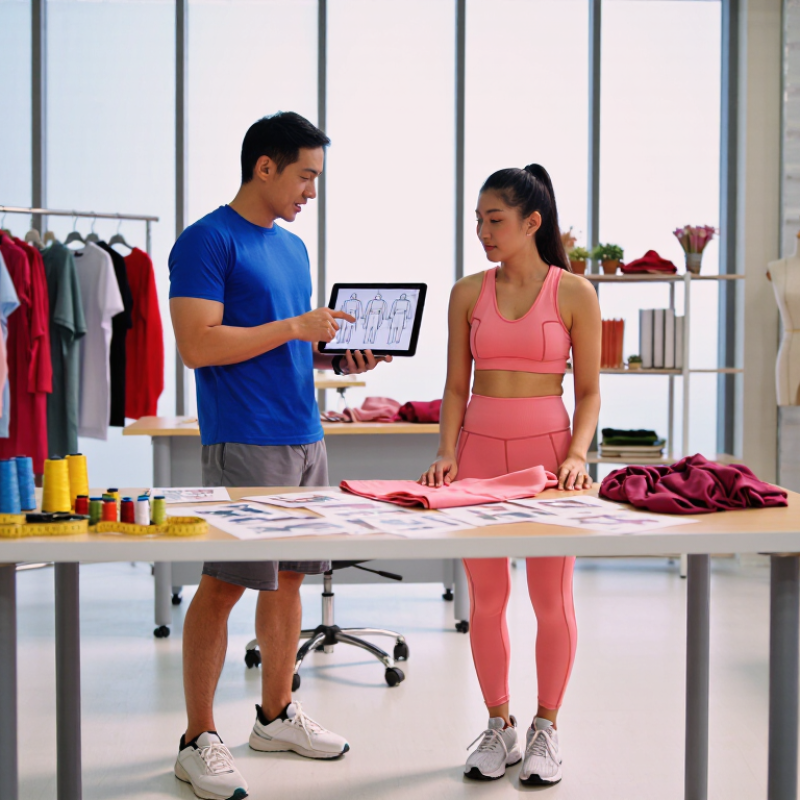
Before contacting a custom sportswear manufacturer, define how and where the garments will be used. A running top for humid summer training needs different fabric from a warm-up jacket worn on a cold sidelines. Note the sport, weather, activity level, and expected wear frequency. Small details matter.
List the items, size range, estimated order quantity, and preferred fit. Specify fabric weight, stretch, breathability, and any needs such as quick drying or abrasion resistance. Describe colors, logos, placement, and print or embroidery preferences with simple sketches or reference photos. Fit is personal. Ask how measurements are taken, and whether a sample can be reviewed before production. A size chart alone may not reveal how a sleeve feels during a full overhead movement.
Set practical expectations for cost, delivery dates, packaging, and quality checks. If the budget is tight, decide which features are essential and which can change; custom trim and complex decoration can affect both price and timing. Test samples during a real practice, then note issues like seams rubbing under a backpack strap or fabric clinging after a hard session. One limitation is that a short sample test cannot predict months of wear. Still, clear notes give a manufacturer useful questions to answer and help prevent avoidable revisions.
Set priorities before comparing manufacturers.
Example team priority ratings on a 1–5 scale (1 = low, 5 = high), not an industry survey. Use your own scores to clarify fabric performance, fit, customization, order quantities, and delivery expectations.
A suitable sportswear manufacturer should match the way your products are made, not just the category listed on its website. Ask whether its team regularly handles your specific fabrics, construction methods, and performance features. Leggings, for example, may require four-way-stretch fabric, secure flatlock seams, and careful control of waistband tension. That matters. Confirm that the factory can manage the full process, including pattern development, grading, cutting, sewing, and finishing.
Request samples made with materials and techniques similar to your planned garments. Check seam consistency, fabric recovery after stretching, print placement, and measurements after washing. Ask what equipment and quality checks support those results. Small details count. A polished sample can still hide an inconsistent production process, so ask how defects are recorded and corrected. If the answers are vague, treat that as a reason to investigate further.
Discuss your expected order size and repeat-order plans before approving a supplier. Some manufacturers excel at complex development but are less suited to frequent small runs; others may have limited capacity for rapid scaling. Clarify minimum quantities, sample timelines, production lead times, and how size tolerances are checked. Be specific. Share a technical pack and ask the manufacturer to flag any construction details that seem difficult or costly. Their questions can reveal useful experience, though a confident answer alone is not proof of capability.
Choosing a custom sportswear manufacturer starts with the fabric, not the catalogue photo. Ask for fiber content, fabric weight, stretch recovery, and care instructions. For running tops, check breathability and drying time; for compression garments, examine how the fabric returns after repeated stretching. Request a sample in the intended color, since dyes can affect hand feel. Feel the difference. Still, a fabric sheet cannot tell the whole story, so test samples during movement and after washing.
Tips: Compare samples under the same conditions. Wash each one several times, then check shrinkage, color change, seam strength, and pilling. Keep notes. Small differences may matter in a full production order.
Ask how the factory checks quality at each stage, from incoming fabric to finished garments. Look for written inspection steps, measurement tolerances, and records for rejected items. Certifications can support your assessment, but verify their scope, issuing organization, and current validity. A certificate for one process or site may not cover every product. Request relevant test reports and clarify which standards apply to your material and intended use. If answers are vague, pause and ask for evidence. A polished sample is useful, but consistent production is the harder test.
Compare landed cost, minimum order quantity, and delivery dates—not just the quoted garment price. Ask each manufacturer to separate fabric, printing, trims, sampling, inspection, and shipping costs. A low unit price can hide expensive setup fees or a high minimum order.
Cheap can be costly.
Ask whether the minimum applies per style, color, or size run; a 300-piece order may become several larger commitments once colors are added.
The Textile Exchange Materials Market Report 2024 estimates global fiber production reached 124 million tonnes in 2023, illustrating the scale of material sourcing behind apparel. That figure does not predict your fabric price, so request a current quote with validity dates and approved material specifications.
For timing, get dated milestones for lab dips, samples, fabric booking, bulk cutting, sewing, inspection, and dispatch. A promised production window is difficult to compare unless it starts from the same approval point. Ask what happens if fabric arrives late, and leave room for revisions.
Four weeks on paper may not include sampling. I would compare two or three written offers, then check whether their assumptions match your actual order; this part is easy to overlook.
A sample should prove more than appearance. Ask for the exact fabric, trims, stitching, and size specifications planned for production. Check the garment after washing, stretching, and repeated movement. Measure key points, such as chest width and inseam, against the size chart. Small details matter. A zipper that catches or a seam that twists can become a costly production problem.
Textile Exchange’s Materials Market Report 2024 estimates that global fiber production reached 124 million tonnes in 2023, with polyester making up 57% of the total. This scale makes material verification important: request fiber-content documentation and confirm that the sample matches the proposed fabric. The United Nations Environment Programme estimates textiles contribute 2–8% of global greenhouse gas emissions. Ask how the manufacturer tracks material choices and waste; specific records are more useful than broad promises.
Compare samples from more than one manufacturer under the same test conditions. Review fit consistency, print placement, color after washing, and how clearly each supplier answers technical questions. Request a revised sample if needed. A polished first sample is not proof of reliable bulk production, and I would not treat it as one. Discuss production capacity, quality checks, lead times, and remedies for defects before choosing a partner. Keep the discussion in writing, including approved measurements and fabric details. A small omission can still slip through.
Ask about experience with your fabrics, seams, and performance features. For leggings, check four-way stretch, flatlock seams, and waistband tension. Request examples of pattern development, grading, cutting, sewing, and finishing. A category listing proves little.
Check seam consistency, print placement, measurements, and fabric recovery after stretching. Wash the sample and measure it again. Small details count. A polished sample can still hide uneven production.
Ask for fiber content, fabric weight, stretch recovery, and care instructions. Test samples while moving and after washing. For running tops, note breathability and drying time. For compression garments, check how the fabric returns after repeated stretching.
Wash each sample several times under the same conditions. Record shrinkage, color changes, seam strength, and pilling. Keep notes. I might be overchecking, but small differences can grow across a large order.
Ask for written inspection steps, measurement tolerances, and records of rejected items. Find out how defects are logged and corrected. No test is perfect. Still, vague answers deserve follow-up questions.
No. Verify the certificate’s scope, issuing organization, and current validity. It may cover one site or process, not every product. Request relevant test reports and confirm which standards apply to your material and intended use.
Discuss minimum quantities, sample timelines, production lead times, and repeat orders before approval. Some factories handle complex development well but struggle with frequent small runs. Others may have limited room to scale quickly.
Share clear measurements, materials, construction details, and performance requirements. Ask the manufacturer to flag difficult or costly details. Their questions may show useful experience, but confidence alone is not proof.
Choosing the right custom sportswear manufacturer starts with a clear understanding of your product requirements. Define the garments you need, their intended use, design features, size range, and expected order volume. Then look for manufacturers with the equipment, skills, and production capacity to make those specific products. A strong match can help keep development and production consistent from the first sample through the finished order.
When comparing potential partners, assess fabric options, construction quality, and relevant certifications, and ask how quality is checked at each stage. Review pricing alongside minimum order quantities and realistic production timelines, rather than judging cost alone. Request samples to evaluate fit, comfort, materials, and finishing before making a decision. Thoughtful research and clear communication help you choose a reliable partner for custom sportswear manufacturing and establish expectations for a productive working relationship.