Industry Overview
Building a Sustainable Apparel Brand
Launching a viable clothing line requires a structured balance between creative design vision and commercial rigor. Operating in the modern apparel market demands an acute understanding of technical manufacturing specifications, minimum order quantity (MOQ) economics, raw material sourcing, supply chain compliance, and global logistical channels.
Whether you are an independent designer launching your first capsule collection or an established brand expansion manager scaling overseas sourcing operations, this guide provides a step-by-step roadmap for executing garment production with minimal friction and maximum profitability.
Rule of Thumb for Timelines: Always triple your initial time estimates for first-run production to account for fabric knitting, laboratory lab-dip approvals, proto-sample iterations, and international customs clearance.
Section 1
1. Financial Planning & Production Timelines
Inadequate capital management and underestimating lead times account for over 70% of early-stage fashion brand failures. Establishing a comprehensive financial schedule prior to cutting fabric is essential for cash flow health.
Estimating Production Lead Times
A typical cut-and-sew garment manufacturing cycle involves sequential steps that cannot be bypassed without sacrificing product quality:
- Tech Pack & Pattern Development: 1 to 2 weeks
- Fabric Sourcing & Custom Dyeing (Pantone Matching): 2 to 3 weeks
- Pre-Production Sample (PPS) Creation: 2 to 3 weeks
- Bulk Manufacturing (Cut, Sew, Print/Embroidery, Trim): 4 to 6 weeks
- 4-Stage Quality Control & Express Freight: 1 to 2 weeks
Plan for a total development timeline of 10 to 16 weeks from initial technical brief to final warehouse receipt.
Section 2
2. Choosing the Right Corporate Structure
Structuring your corporate entity properly protects personal assets and establishes credibility with international textile mills, financial institutions, and retail buyers.
Sole Proprietorship / Sole Trader
Simple and low-cost to establish. However, there is no legal separation between personal assets and business liabilities. Unsuitable for raising venture capital or securing large commercial credit lines with textile manufacturers.
Private Limited Company (Ltd / LLC)
Establishes an independent legal entity. Directors enjoy limited liability, shielding personal wealth from corporate debts. Preferred status by trade vendors, commercial couriers, and international retail stockists.
Section 3
3. Funding Strategies for Garment Manufacturing
Securing sufficient working capital ensures your brand can cover sampling, bulk production, import tariffs, and e-commerce infrastructure.
Key Capital Sources
- Self-Funding (Bootstrapping): Retains 100% brand equity and control. Enforces strict purchasing discipline during development.
- Government-Backed Business Loans: Fixed-interest funding options designed for working capital and inventory acquisition without surrendering business shares.
- Angel Investment & Private Equity: Provides high-volume capital and industry supply chain contacts in exchange for equity ownership.
- Presale Crowdfunding: Validates market demand and finances initial bulk production through upfront consumer pre-orders.
Section 4
4. Market Positioning & Niche Identification
Competing against fast-fashion conglomerates requires strict market segmentation. Define your target customer demographic using verifiable parameters:
Demographic Profiling
Define exact age brackets, geographic distribution, disposable income levels, and purchasing channels (D2C vs Wholesale).
Technical Differentiation
Compete on specialized fabric GSM weights, custom knit structures, organic certifications (GOTS), or specialized performance fits.
Section 5
5. The Technical Design Process & Tech Packs
Garment factories operate strictly according to technical engineering blueprints. An incomplete specification leads to inaccurate fit, incorrect fabric choices, and rejected production runs.
Essential Tech Pack Elements
A factory-ready tech pack must include:
- Vector Flat Sketches: Detailed front, back, side, and interior construction views.
- Bill of Materials (BOM): Specification of main fabric, lining, thread density, zippers, drawcords, and care labels.
- Measurement Spec & Size Grading: Detailed dimensional charts across all size ranges (XS to XXL) with strict tolerance limits (+/- 0.5cm).
- Colorway Matrix: Industry-standard Pantone (TCX/TPG) color references.
- Artwork Placement Specs: Exact position, scale, and technique details for screen printing, DTG, or high-density embroidery.
Section 6
6. Selecting a Garment Production Model
Understanding the distinction between garment production models determines your operational involvement, unit margins, and minimum order requirements.
1. Cut, Make, Trim (CMT) Manufacturing
The brand provides all raw materials (fabrics, thread, labels, zips) to the factory floor. The factory only cuts, stitches, and finishes the garment. Best suited for high-end fashion houses with dedicated in-house fabric sourcing teams.
2. Full Package Production (FPP) — Recommended
The manufacturing partner manages the end-to-end supply chain: fabric knitting, custom dyeing, pattern grading, sampling, bulk cutting, embellishment, quality control, and export packaging. FPP simplifies procurement, ensures standardized quality, and reduces supply chain friction for growing brands.
3. Print-On-Demand (POD)
Printing graphics onto mass-produced, off-the-shelf blank garments. While requiring minimal upfront investment, POD limits design customization, delivers low profit margins, and lacks brand exclusivity.
Section 7
7. Vetting International Garment Factories
When shortlisting prospective apparel manufacturers, evaluate their capabilities against key criteria:
- Minimum Order Quantities (MOQs): Confirm MOQs per design, per colorway, and per size breakdown.
- Quality Control Framework: Ensure the facility conducts a rigorous multi-stage QC audit (Raw Fabric Inspection, In-line Stitching Check, End-of-line Audit, and Pre-pack Final Audit).
- Vertical Integration: Assess if the factory handles embroidery, screen printing, and dyeing in-house or through audited subcontractors.
- Compliance & Ethics: Verify fair labor standards, safe working conditions, and environmental compliance.
Section 8
8. E-Commerce Infrastructure & Domain Authority
Your online store serves as your global showroom. High-performing fashion websites focus heavily on speed, trust signals, and seamless user experience (UX).
- Page Load Optimization: Compress product imagery and leverage next-gen formats (WebP/AVIF) to keep load times under 2 seconds.
- Domain Email Authentication: Utilize branded domain email routing to maintain professional communication standards with B2B buyers and consumers.
- Mobile-First UX: Over 60% of fashion e-commerce purchases occur on mobile devices. Ensure touch-friendly navigation and streamlined checkout integrations.
Section 9
9. Marketing, Branding & Customer Retention
Developing a strong brand voice and aesthetic consistency across all customer touchpoints builds long-term customer lifetime value (LTV).
- Visual Identity: Maintain unified typography, color palettes, and editorial guidelines across all digital and print media.
- Targeted Content Strategy: Focus outreach on channels aligned with your demographic (Instagram, TikTok, Pinterest, or LinkedIn for wholesale).
- Brand Advocacy: High garment quality drives low return rates and word-of-mouth organic growth.
Section 10
10. Commercial Apparel Photography
Because online buyers cannot physically touch or try on garments before purchase, visual presentation directly impacts conversion rates and return percentages.
E-Commerce Ghost Mannequin / Studio Shots
Clean, color-accurate product photography displaying front, back, lining, stitching, and trim details against neutral backdrops.
Editorial Model Shoots
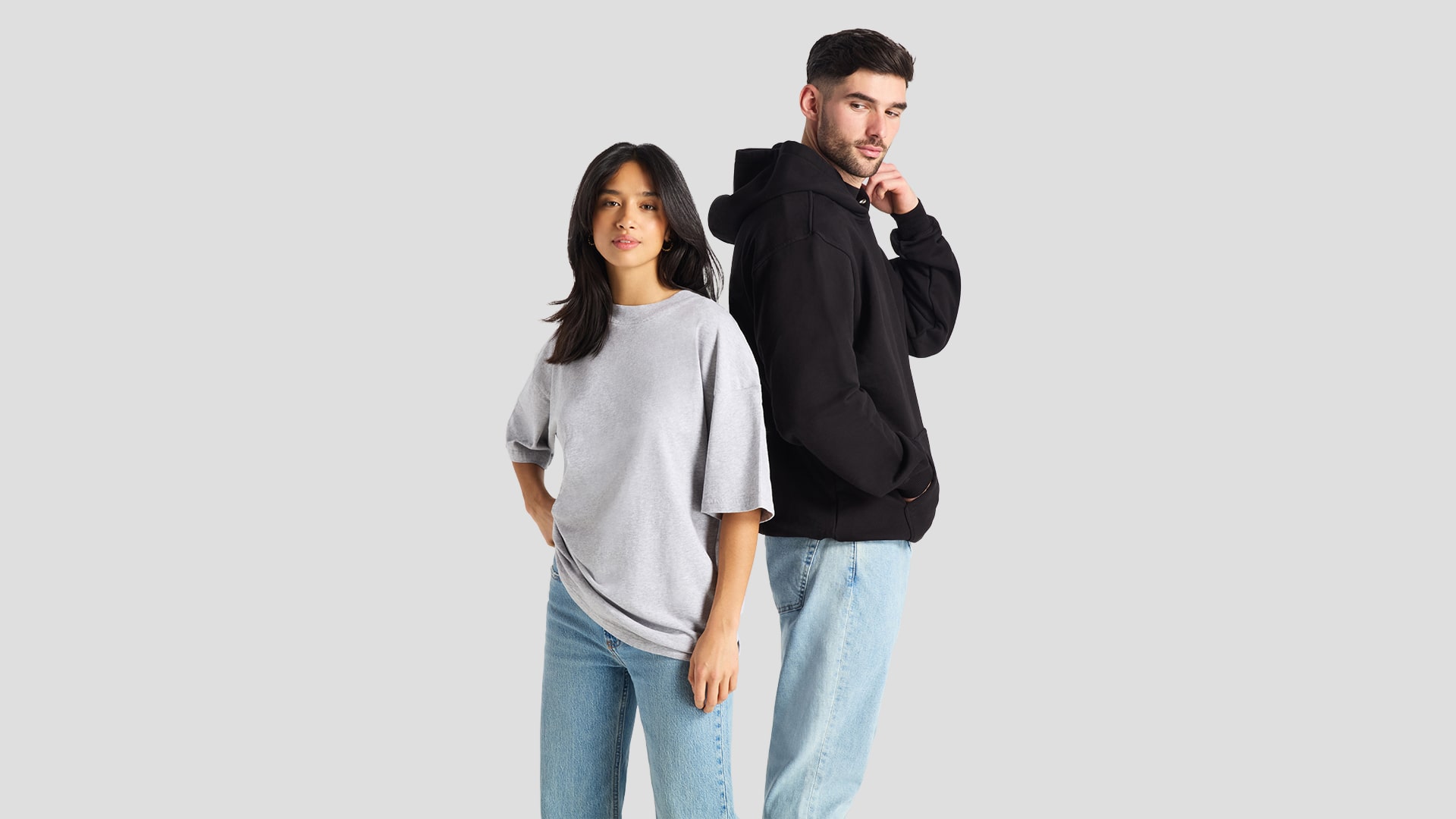
Lifestyle imagery showcasing garment drape, fit, movement, and contextual brand lifestyle positioning.
Section 11
11. International Freight & Customs Duties
Navigating global trade logistics requires clear knowledge of shipping modes, Incoterms, and import tax compliance.
Freight Modes Comparison
- Air Express (DHL / FedEx / UPS): Fast delivery (3–5 days), fully tracked, ideal for urgent pre-production samples and high-value small batch orders. Calculated on volumetric weight.
- Air Freight: Transit time of 7–10 days. Cost-effective for medium bulk shipments where time-to-market is critical.
- Sea Freight (LCL / FCL): Highly economical for large volume production. Transit times vary from 25 to 45 days depending on global sea routes.
Customs & Duties Compliance
Ensure commercial invoices properly state the correct HS Tariff Codes for textiles, garment fiber compositions, and declared customs values. Obtain a valid EORI number for seamless customs processing into the UK, EU, or North American destinations.
Start Your Garment Production Journey Today
Partner with Hawthorn International to bring your custom clothing designs to life. Enjoy low 50pc MOQs, dedicated account management, full tech pack support, and rigorous 4-stage quality control.
Contact Us