0%

Finding a reliable apparel partner in 2026 takes more than searching for a factory with a green website. Sustainable apparel manufacturing depends on verifiable practices, consistent product quality, and clear communication. A manufacturer should be able to explain where its fibers come from, how materials are processed, and what happens to production waste. Specific answers matter.

Start by matching your product needs to a factory’s actual capabilities. A small knitwear label, for example, may need low minimum order quantities, recycled yarn options, and careful color matching. Ask for current certificates, but check their scope, validity, and connection to the facility and products you plan to order. Paperwork alone is not proof. Request material records, sample garments, and references where available.

A thoughtful evaluation also looks beyond fabric claims. Ask how the factory monitors working conditions, manages water and energy use, and handles rejected or leftover stock. If possible, arrange a video call or visit and compare what you see with the documents provided. Then review pricing, lead times, quality controls, and communication before committing to a production run. Promises can sound convincing. Evidence is better.

No supplier will meet every ideal, and sustainability claims can be difficult to compare across regions. Be transparent about your own priorities, document unresolved questions, and revisit them as the relationship develops. This guide will help you build a practical shortlist, verify important claims, and choose a manufacturer whose strengths fit your business—not just your marketing plans.
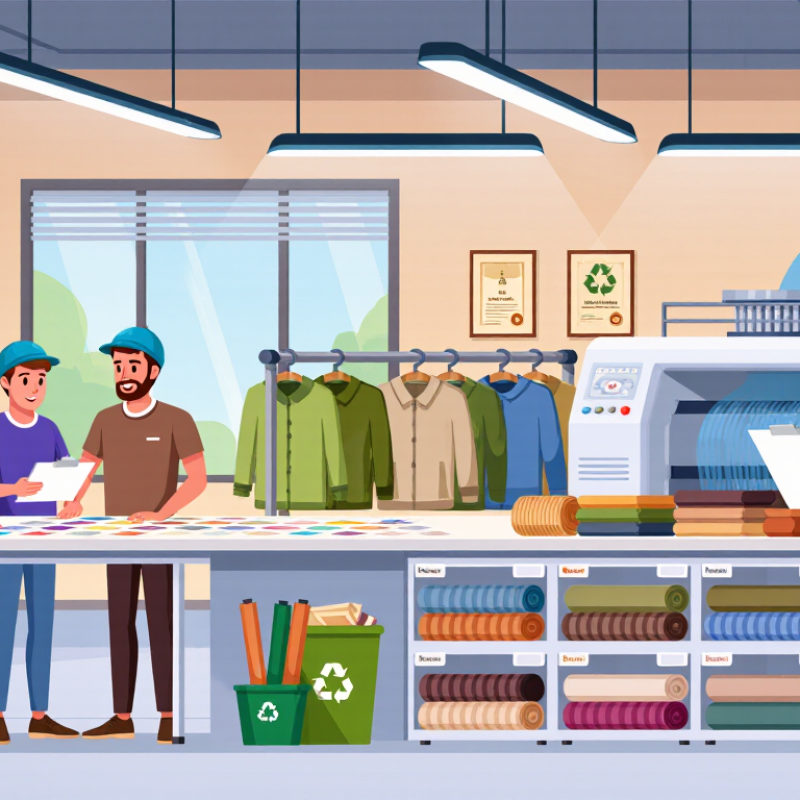
How to Find Sustainable Apparel Manufacturers in 2026?

Define What Sustainable Apparel Manufacturing Means in 2026

In 2026, sustainable apparel manufacturing should describe measurable practices, not just a green label. A cotton shirt may contain recycled fiber and still have a significant footprint. Dyeing can consume substantial water, while energy use and transport add other impacts. That matters. A useful definition looks across materials, production, worker conditions, and a garment’s expected life.

A credible manufacturer should explain where fibers come from and how facilities manage energy, water, wastewater, and production waste. Ask for recent, facility-level records rather than relying on broad promises or certificates alone. Request material specifications, production locations, and clear answers about subcontracting. Numbers need context. Water use per kilogram of dyed fabric is more informative than a vague claim of “lower impact.” During a factory assessment, check whether written procedures match visible practices, such as chemical storage and wastewater handling.

There are trade-offs. Recycled synthetics can release microfibers during washing, while natural fibers still require land and water. Nearby production is not automatically lower-impact if its energy source is highly polluting. No option is perfect. Compare alternatives using consistent measurements, and ask manufacturers to identify data gaps instead of presenting estimates as verified facts. A supplier willing to discuss limitations may offer a more dependable basis for sourcing decisions.

Identify Manufacturers That Match Your Product and Production Needs

Finding a sustainable apparel manufacturer starts with product fit, not a green-sounding claim. Knitted tees require different machinery and finishing skills than woven outerwear. Put fabric, weight, colors, order volume, delivery windows, and defect limits in one sourcing brief. Textile Exchange’s 2024 Materials Market Report estimates global fiber production reached 124 million tonnes in 2023. That scale makes material choices consequential, but it cannot show whether one mill can supply your chosen yarn consistently.

Ask shortlisted factories for machine lists, monthly capacity by product type, sample lead times, minimum order quantities, and recent delivery records. Request the names of fabric mills and dyehouses, relevant fiber certificates, chemical-management documents, and wastewater test dates. UNEP’s 2023 textile value-chain stocktaking estimates the sector contributes roughly 2–8% of global greenhouse-gas emissions, a broad range that reflects measurement limits. Compare energy sources, water use per kilogram, and effluent controls. Ask how each figure was measured. Spreadsheets can hide gaps.

Test operational fit with a paid sample and small pilot run. Check seam strength, shrinkage after washing, shade variation, trim substitutions, and carton labels against your written specifications. Ask who approves changes when fabric becomes unavailable, and record the answer. A polished audit file is not proof of a steady production line. Low prices deserve questions, not automatic rejection. Capacity forecasts are estimates, so leave time for another sample and verify claims with the production team.

Verify Environmental, Social, and Traceability Claims

A sustainability claim is only as useful as the evidence behind it. Ask manufacturers for recent environmental data tied to the specific facility and product, not broad company averages. Compare water and energy figures with production volumes, and check whether wastewater test results include dates, locations, and independent laboratory details. A polished certificate is not the whole story.

For social claims, review audit scope, corrective-action records, and how workers can raise concerns without management present. Ask how findings were resolved, not just whether an audit occurred. Speak with staff during a site visit when possible, while respecting privacy and avoiding staged interviews. Records can be incomplete. That matters.

Traceability should connect each garment to its material inputs and production steps. Request purchase records, supplier lists, batch or lot references, and documents showing how materials move between facilities. Then select one product and follow its records backward; mismatched dates or quantities deserve questions. Chain-of-custody paperwork can support a claim, but it may not prove every detail on its own. Verification takes time, and even careful checks leave gaps. Document what remains uncertain before relying on a claim.

How to Find Sustainable Apparel Manufacturers in 2026? — Verify Environmental, Social, and Traceability Claims

Dimension What to Request How to Verify What a Strong Result Looks Like Red Flags and Limitations
Facility and supplier scope List of production sites involved in the proposed order, including subcontractors and the processes performed at each site. Compare the list with the contract, factory address records, audit reports, and certification scope documents. Ask who will handle cutting, sewing, dyeing, washing, printing, and finishing. Every facility and material-processing stage is disclosed, and changes require advance approval. A certificate for one site does not automatically cover other sites, subcontractors, or every process in a supply chain.
Organic fiber claims Fiber composition, current transaction documents for the relevant materials, and certification scope covering the applicable processing stages. Check that the certificate is current, covers the named facility and relevant product category, and matches the material and order documentation. For GOTS claims, confirm that the claimed product and supply-chain stages fall within the applicable certification scope. The fiber claim is supported by order-specific records that connect the material to the finished goods. A facility certificate alone is not proof that a particular shipment or finished product contains certified fiber. “Natural” does not mean organic.
Recycled-content claims Recycled-content percentage by product component, material specifications, and chain-of-custody or transaction records. Check whether the stated percentage applies to the whole product or only a component. Confirm that records match the material, order, and delivery. Where relevant, review the scope and chain-of-custody requirements of standards such as GRS or RCS. The supplier provides a clear calculation, identifies the recycled material, and supports the claim with traceable records. A recycled-content standard does not by itself establish that a product is recyclable, low-impact, or made entirely from recycled material.
Restricted substances and chemical safety Restricted-substance list, chemical inventory, process controls, and test reports for relevant materials or finished products. Review test scope, sample identity, test date, laboratory competence, and the applicable market requirements. OEKO-TEX STANDARD 100, where used, concerns testing for harmful substances; check the product class and certificate validity. Testing is relevant to the actual product and its intended use, with corrective-action procedures for failures. A test report covers only the tested sample and substances within its scope. A harmful-substance label is not proof of low water use, low emissions, or fair labor.
Water use and wastewater Water-use records by facility and process, wastewater treatment details, discharge permits where applicable, and recent monitoring results. Compare records over defined periods and production volumes. Review sampling dates, test parameters, laboratory details, and evidence that required permits and treatment systems are in place. Facility-specific data is documented, consistently measured, and linked to relevant wet-processing operations. Corporate-level totals can hide facility differences. A treatment-system photograph or policy statement is not a substitute for operating and discharge records.
Energy and greenhouse-gas claims Facility energy data, fuel and electricity sources, reporting boundaries, calculation methods, and emissions-reduction targets. Check the reporting period, included facilities, production basis, and whether figures are measured or estimated. Distinguish factory emissions from product-level footprint claims. Data has a clear boundary and method, and progress is compared across consistent periods. Renewable-energy certificates or offsets do not automatically mean that a product or factory has zero emissions. Claims need transparent accounting and boundaries.
Worker rights and workplace conditions Worker-rights policy, wage and working-hour records, health-and-safety procedures, grievance channels, and recent independent assessment reports. Ask how workers can raise concerns confidentially and without retaliation. Review corrective actions and, where possible, conduct confidential worker interviews separate from management. Evidence covers actual working conditions, includes worker input, and shows that identified issues were corrected and monitored. A signed code of conduct or audit certificate is not proof that violations never occur. Audits are snapshots and may miss hidden subcontracting or coercion.
Wages and working hours Payroll and time records, overtime policies, wage calculations, and the method used to assess wage adequacy. Check whether records cover the production period and whether hours, overtime, deductions, and payments can be reconciled. Compare wages with applicable legal requirements and a clearly stated wage benchmark. Records are consistent, workers receive wages on time, and overtime is recorded and handled lawfully. “Living wage” needs a defined benchmark, location, and calculation method; a general policy statement is not evidence of payment.
Subcontracting and order control Written subcontracting rules, an approved-site list, production capacity information, and a process for reporting changes. Compare planned capacity with order volume and delivery timing. Confirm that unapproved subcontracting is prohibited and that all production locations can be checked. The manufacturer can explain where the order will be made and maintains records of any authorized production transfer. Unexpectedly low prices or unusually short lead times may warrant further investigation but are not, by themselves, proof of misconduct.
Product-level traceability Purchase orders, bills of materials, supplier records, batch or lot identifiers, and shipment documents linking inputs to finished goods. Choose a finished product or shipment and trace its materials backward through the records. Check that quantities, dates, facility names, and product identifiers align. A documented chain connects the finished product to its materials and relevant production sites, with records available for the specific order. Digital dashboards and QR codes are useful only when their underlying data is complete, current, and verifiable.
Certifications and audit reports Certificate number, issuing or verification body, validity dates, covered sites, scope, exclusions, and corrective-action status. Verify certificates through the relevant standard or issuer’s official verification process. Read the scope rather than relying on a logo or certificate image. Documents are current, independently verifiable, and relevant to the facility, product, and claim being made. Different standards address different issues. No single certification proves that a manufacturer is sustainable in every environmental and social dimension.
Claims, records, and contract terms Written claim definitions, evidence-retention requirements, audit access, corrective-action timelines, and a right to approve material or site changes. Ensure the contract identifies the evidence required for each claim and who is responsible for maintaining it. Recheck documentation during production and before shipment. Claims are specific, qualified, supported by accessible records, and subject to ongoing review. Broad terms such as “eco-friendly,” “ethical,” or “zero impact” are difficult to assess without a defined scope and supporting evidence.

Practical rule: Verify each claim separately, for the relevant facility, product, and order. Certifications and audits provide evidence within a defined scope; they are not blanket guarantees of sustainability.

Compare Quotes, Capabilities, Certifications, and Minimum Orders

Send every factory the same product brief: fiber content, fabric weight, color, construction, size range, trims, and target volume. Ask for an itemized quote covering sampling, fabric, labor, labels, packing, testing, and freight assumptions. Compare like with like; a low price may exclude dyeing or quality checks. Ask what can change after approval, and how rework is priced. Request a sample made with the proposed fabric, then inspect seams, shrinkage, color consistency, and hand feel. Keep notes.

Capabilities should match the garment, not just a polished catalog. Ask about monthly capacity, specialist machinery, production stages handled in-house, and experience with similar fabrics. Request evidence, such as a production walkthrough, sample records, and references you can contact. Verify the issuer, validity, facility, and scope of each certificate. It may cover one site or material, not every product. Ask whether the minimum order applies per style, color, or fabric, and compare a smaller pilot run with the standard order. Low minimums can reduce leftover stock, but may raise unit costs or limit fabric choices. The comparison can still feel messy. No spreadsheet catches everything. If a supplier cannot explain a claim clearly, request documents before paying a deposit.

Evaluate Samples and Build a Responsible Manufacturing Partnership

A sustainability claim matters only when the sample supports it. Request a production-ready garment made with the proposed fabric, trims, and finishing methods. Inspect seam strength, stitching consistency, labels, and packaging. Wash it. Then check shrinkage, color change, and how the fabric feels after drying. Record measurements before and after, since small differences can affect fit across a full order. Ask for clear details about fiber content, recycled inputs, and any certifications, including which facility and material they cover. A fabric swatch alone cannot show how a finished garment will perform.

Treat sample review as a working conversation, not a pass-or-fail test. Discuss realistic order quantities, lead times, material availability, and how production waste is handled. Ask who will oversee quality checks and how problems are reported. Agree on written specifications, approval steps, and a process for correcting defects before production begins. Keep dated samples and notes so both sides can compare later batches against the approved version. No checklist catches everything. A rushed review can miss details, and I would allow time for another sample when results feel uncertain. That small delay may prevent costly surprises and help build a more responsible, transparent partnership.

FAQS

What should a sourcing brief include?

List fiber content, fabric weight, colors, construction, size range, trims, order volume, delivery windows, and defect limits. Clear details reduce guesswork.

How can I check whether a factory suits my garment?

Ask about machinery, monthly capacity by product type, production stages, and experience with similar fabrics. Knitted tees and woven outerwear need different skills.

Which sustainability details should I request?

Ask about energy sources, water use per kilogram, effluent controls, and how each figure was measured. Request wastewater test dates and chemical-management documents.

How should I compare supplier quotes?

Request itemized costs for sampling, fabric, labor, labels, packing, testing, and freight assumptions. A low price may leave out dyeing or quality checks. Keep notes.

What should I verify about certificates?

Check the issuer, validity, facility, and scope. A certificate may cover one site or material, not every product.

Why order a sample and pilot run?

Inspect seam strength, shrinkage after washing, shade variation, trim substitutions, and carton labels. Compare each detail with your written specifications. Small flaws matter.

How do minimum order quantities affect my choice?

Ask whether the minimum applies per style, color, or fabric. A smaller pilot may reduce leftover stock, but raise unit costs or limit fabric choices.

What should I ask when fabric becomes unavailable?

Ask who approves substitutions and how rework is priced. Record the response. A polished audit file still cannot prove a steady production line.

How can I assess delivery and capacity claims?

Request recent delivery records, sample lead times, and production references. Leave time for another sample; capacity forecasts are estimates. Spreadsheets miss things.

Conclusion

Sustainable apparel manufacturing in 2026 starts with a clear definition of what sustainability means for your products, materials, production methods, and supply chain. Before approaching manufacturers, outline your product specifications, expected volumes, quality standards, timelines, and preferred sourcing practices. Then identify potential partners whose equipment, expertise, and production capacity fit those needs. Ask for clear evidence behind environmental, social, and traceability claims, including details about materials, working conditions, and how products and inputs are tracked.

Compare each manufacturer’s capabilities, certifications, minimum order quantities, pricing, and lead times rather than choosing on cost alone. Request samples to assess construction, fit, materials, and consistency, and use the process to evaluate communication and problem-solving. Once you find a suitable partner, agree on expectations, quality checks, timelines, and transparent updates. A responsible manufacturing relationship is built through careful verification, realistic planning, and ongoing collaboration.


Evelyn

Evelyn

Evelyn is a dedicated marketing professional with a strong understanding of the company’s products, customers, and industry landscape. With a talent for transforming complex product information into clear, practical, and engaging content, she regularly contributes expert articles to the company’s......