Bespoke apparel manufacturing turns a design into a garment shaped around a person, not an average size chart. It can involve individual measurements, pattern adjustments, fabric selection, fittings, and careful finishing. The process is hands-on. A chalk mark, a pinned sleeve, or a small change at the shoulder can alter how a jacket moves. Yet custom work does not guarantee excellent results. Fit, construction, communication, and delivery all matter.
Fashion designer and sustainability advocate Vivienne Westwood offered a useful principle: “Buy less, choose well, make it last.” Her advice is not a technical guide to factory operations, but it points to a key question for any bespoke maker: will the garment earn years of wear? That question deserves more than polished product photos. Buyers should look for clear measurement procedures, skilled patternmaking, material information, and a realistic account of production timelines.
This guide introduces ten bespoke apparel manufacturing companies worldwide and the capabilities that distinguish them. It considers craftsmanship, customization, production scale, and the kinds of clients each company may suit. The comparison is not a promise that one maker fits every need. That would be too neat. A strong choice depends on the garment, budget, fabric, location, and willingness to take part in fittings. Details matter. So do honest limits.
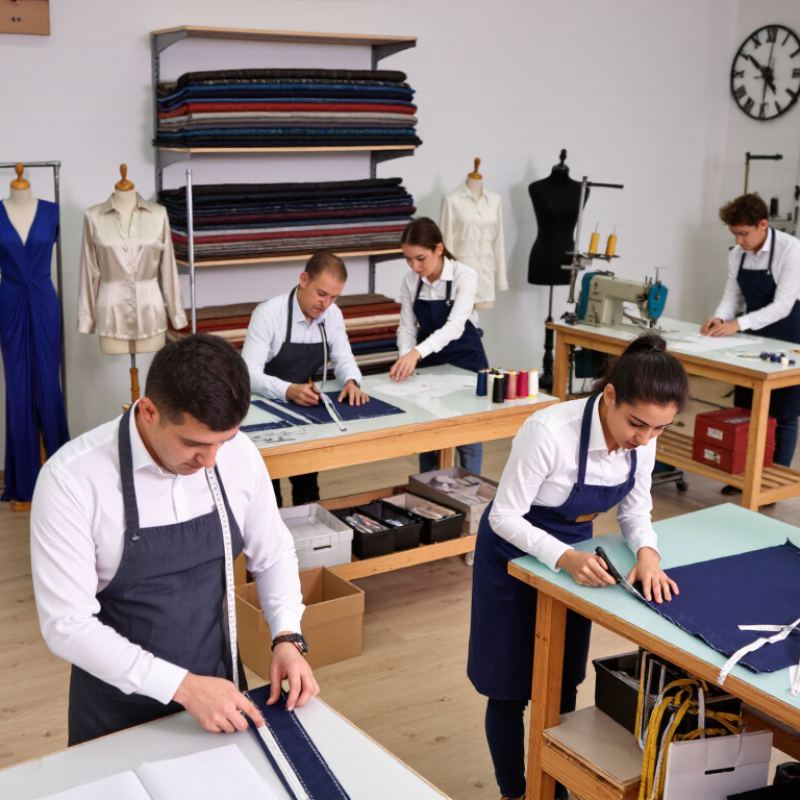
Bespoke apparel manufacturing creates garments around a client’s specific measurements, design choices, and intended use. The process usually begins with a consultation, followed by pattern development, fabric selection, sample construction, fitting, and final production. A tailor may adjust a jacket’s shoulder balance or sleeve pitch after seeing how the wearer moves. Details matter.
The term can cover a single garment or a small production run, depending on the maker’s capabilities. It does not automatically mean luxury, nor does every customized product qualify as bespoke. Made-to-measure often adapts an existing pattern, while bespoke work typically develops or substantially modifies a pattern for the client. In practice, the boundary is not always neat, so buyers should ask how measurements, fittings, revisions, and quality checks are handled. Even careful measurements can miss a posture preference.
Tips: Request a clear description of the fitting process, fabric options, alteration policy, and expected production timeline. Share practical needs, such as pocket placement or frequent sitting, before pattern work begins. A written specification helps prevent small details from becoming costly surprises.
Selecting a leading bespoke apparel manufacturer requires more than polished photographs or a low quote. Look for evidence of hands-on expertise: ask how the team turns a technical sketch into a wearable sample, and who checks fit before production. Request a sample made with the proposed fabric, trims, stitching, and finishing. Details matter. Inspect seam consistency, button alignment, and how the garment sits when a person moves. A neat sample is useful, but it does not guarantee every production piece will match.
Reliable manufacturers explain their process clearly. Ask about minimum order quantities, realistic lead times, fabric sourcing records, and inspection steps at cutting, sewing, and packing. Ask for evidence. A written measurement chart with tolerances is more useful than a general promise of “perfect fit.” References from comparable projects can help, though confidentiality may limit what a factory can share. Notice how quickly the team flags a problem, such as a fabric shortage or a pattern that needs revision. That takes time. Compare communication quality, not just price, and confirm who will approve changes across time zones. No single checklist fits every project; a small run may value flexibility, while a larger order may need stronger capacity and documented quality controls.
These ten profiles compare manufacturing strengths, not company names; a global ranking would need verified capacity, quality, and delivery records. Profile 1: the full-package tailor coordinates patterns, fittings, cloth, and finishing. Profile 2: the made-to-measure suit specialist adjusts shoulder pitch and sleeve length from individual measurements. Profile 3: the small-batch knitwear maker handles yarn selection, gauge, and linking. Profile 4: the denim workshop focuses on pattern consistency, washes, and sturdy seams. Profile 5: the performance-wear producer works with stretch fabrics, flat seams, and repeatable testing. Fit is unforgiving.
Profile 6: the occasionwear studio manages delicate fabrics and close hand-finishing. Profile 7: the workwear maker prioritizes durable stitching and practical pockets. Profile 8: the uniform supplier supports repeat orders and size grading. Profile 9: the artisanal atelier offers intricate construction, though output can be limited. Profile 10: the on-demand workshop uses digital patterns to reduce excess stock, but its quality still depends on skilled operators. The ILO estimates that more than 60 million people work in textile, clothing, and footwear industries worldwide, underscoring the sector’s scale. UNEP reports fashion-related emissions at roughly 2–8% of global emissions, a broad range that reflects measurement challenges. These figures provide context, not a scorecard for individual manufacturers. Rankings remain imperfect: price sheets rarely reveal rework rates or the feel of a finished seam.
Illustrative planning ranges for a custom garment order, from initial consultation through final delivery. Actual timelines vary by garment complexity, materials, fitting rounds, and shipping.
Bars show approximate midpoint estimates in working days; they are workflow estimates, not company-specific performance data.
Bespoke manufacturers usually combine made-to-measure cutting, small-batch production, and hand finishing. Digital pattern systems reduce fitting errors, while skilled technicians adjust shoulders, sleeves, waistlines, and trouser breaks. Some workshops use 3D sampling before cutting physical fabric. It saves time, but virtual fit is not perfect. Bodies remain unpredictable.
Customization also depends on material control. Textile Exchange’s Materials Market Report 2024 estimated global fiber production at 124 million tonnes in 2023, with continued growth expected. This pressure encourages manufacturers to offer traceable fibers, deadstock fabrics, and lower-volume production. Cut-and-sew remains flexible for complex designs. Knit-to-shape methods can reduce cutting waste. Embroidery, laser finishing, garment dyeing, and digital printing add visual detail without requiring huge orders. McKinsey’s 2021 personalization research found that 71% of consumers expect personalized interactions, while 76% feel frustrated when businesses do not provide them. Custom sizing is now commercial, not merely decorative.
Tips: Ask for a physical sample before approving bulk production. Confirm fabric composition, shrinkage testing, measurement tolerances, and alteration policies. Request clear photos of seams and inside finishes. Small orders may cost more per unit. That is normal. However, cheaper production can hide weak quality control, delayed fittings, or inconsistent sizing. A reliable manufacturer explains these limits early, although not every supplier does.
The leading bespoke apparel manufacturers serve varied markets across North America, Europe, Asia, and the Middle East. Their work supports luxury fashion, corporate uniforms, hospitality, healthcare, sportswear, and workwear. Each sector requires different fabric performance, sizing systems, and production controls. A tailored jacket may need hand-finishing, while medical garments demand easy cleaning and consistent fit. Regional climate also matters. Lightweight linen suits suit coastal markets, while insulated workwear performs better in colder regions.
Experienced manufacturers usually begin with a detailed tech pack, measured samples, and a small pilot run. They test stitching, colorfastness, shrinkage, and comfort before scaling production. Reliable suppliers also explain minimum order quantities, lead times, packaging, and material origins clearly. This process helps buyers avoid expensive surprises across borders. However, no factory is perfect. Communication can still weaken when specifications cross languages or time zones. That risk deserves honest review.
Tips: Compare factories by industry experience, not catalog size. Request sample measurements and inspection records. Ask how they handle rework, late materials, and changing demand. Visit the facility when possible, or arrange a live video audit. Keep one approved sample for production checks. A beautiful sample means little if later batches vary. Buyers should also reassess supplier performance each season, because market needs change faster than expected.
Ask how the team turns a technical sketch into a wearable sample. Check who reviews the fit, seams, buttons, and movement.
It lets you inspect the actual fabric, trims, stitching, and finishing. A neat sample helps, but later production pieces may still vary.
Confirm minimum order quantities, lead times, fabric sourcing, and inspection steps. Request a measurement chart with clear tolerances.
Notice whether the team quickly reports issues, such as fabric shortages or pattern revisions. Slow or unclear updates can cause problems.
Yes. Medical garments need consistent fit and easy cleaning, while tailored jackets may require careful hand-finishing.
Start with measured samples and a small pilot run. Test stitching, colorfastness, shrinkage, and comfort before increasing production.
Compare relevant industry experience, inspection records, and their approach to rework or late materials. Catalog size alone tells little.
A visit can help. If travel is difficult, arrange a live video audit and keep an approved sample for later checks.
No. Later batches can differ. Check production pieces against the approved sample and review supplier performance each season.
Bespoke apparel manufacturing refers to the creation of clothing tailored to specific measurements, design preferences, material requirements, and functional purposes. This article explores how leading worldwide manufacturers are evaluated through criteria such as craftsmanship, production quality, customization flexibility, technology, ethical practices, delivery reliability, and ability to support different order volumes. It presents profiles of ten notable manufacturers without focusing on brand identities, highlighting their expertise and distinctive production strengths.
The discussion also examines production methods, including traditional tailoring, advanced pattern development, digital sampling, small-batch production, and scalable manufacturing. It explains how manufacturers serve diverse global markets and industries, including fashion, corporate wear, hospitality, performance clothing, and specialized uniforms. By comparing customization capabilities, communication processes, quality control, and international service coverage, the article offers a practical overview for businesses and organizations seeking reliable partners in bespoke apparel manufacturing.