Choosing among the top custom denim manufacturers requires more than comparing price lists. A strong partner must translate a sketch into a dependable garment, from fabric weight and stitch density to pocket placement and wash character. Custom denim manufacturing also depends on clear communication. A missed shade approval can change the whole collection.
Denim innovator Adriano Goldschmied captured the material’s character: “Denim is a fabric that has a soul.” That idea matters when buyers assess mills and factories. Ask how suppliers manage sampling, production capacity, quality checks, and repeat orders. Request fabric swatches, wash samples, and a written timeline before committing. Look closely at seams, hardware, shrinkage, and color consistency. Small details show a lot.
This guide compares manufacturers through practical sourcing questions, not glossy claims alone. It considers customization options, minimum order quantities, lead times, communication, and production oversight. The best fit may be a specialist with a narrow product range, not the largest factory. Yet even a careful shortlist can miss something. A sample may look perfect under studio lights and feel different in daylight. Buyers should test garments in real conditions and confirm expectations in writing. That extra care takes time. It can prevent costly surprises later.
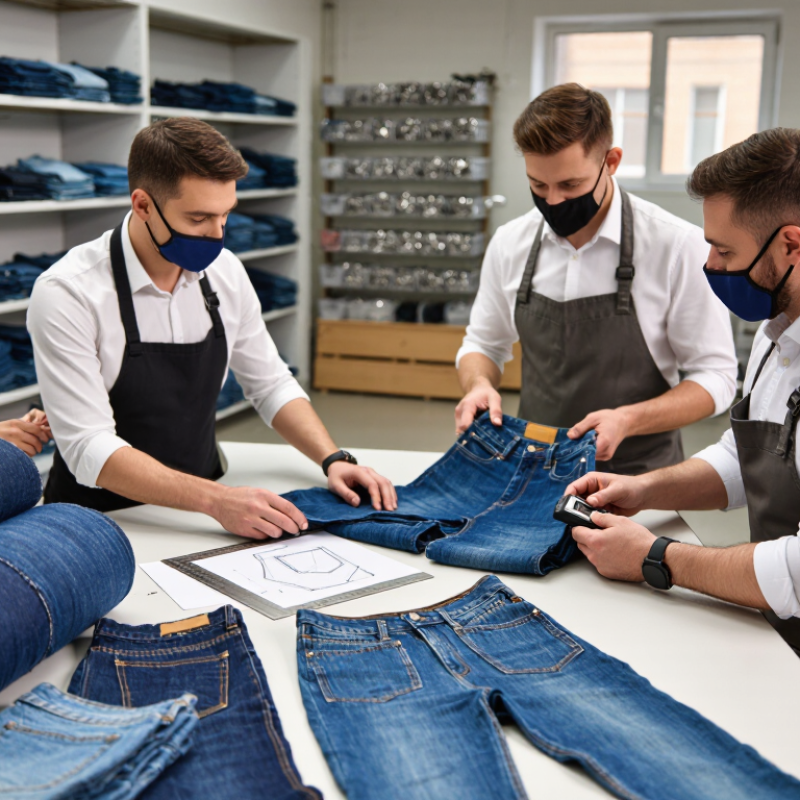
Custom denim manufacturers translate a buyer’s design brief into workable garments. They advise on denim weight, fiber content, stretch, color, and construction before cutting begins. A buyer might request a rigid, dark jean with a high rise; the manufacturer can turn that description into a fabric choice, measurement chart, and sample. Clear specifications reduce costly misunderstandings.
Their services often include pattern development, sample sewing, wash trials, fit adjustments, bulk production, and quality checks. Technicians may measure waistband width, inseam length, pocket placement, and shrinkage after washing. Buyers should review samples in person or through detailed photographs, then confirm acceptable measurement tolerances. Small details matter. A pocket shifted by a few millimeters can change the garment’s appearance.
For global buyers, manufacturers also coordinate timelines, production updates, packing details, and shipping arrangements. Reliable partners share realistic lead times and flag problems early, such as fabric delays or a wash result that differs from the approved sample. Buyers can ask how defects are recorded and how finished garments are inspected. Even careful sampling cannot predict every production issue. That gap deserves honest discussion, not a rushed promise.
Top Custom Denim Manufacturers for Global Buyers?
Key Production Capabilities and Customization Options
A capable denim manufacturer should translate a design brief into measurable fabric and garment specifications. Buyers can customize denim weight, yarn character, weave, shade, stretch, and selvedge construction. Ask for sample rolls and garment wash tests before approving bulk production. A swatch alone cannot show how seams will twist after washing.
Production checks matter. Request documented testing for shrinkage, colorfastness, seam strength, and fit grading across sizes. Textile Exchange’s Materials Market Report 2024 estimates global fiber production reached 124 million tonnes in 2023, with cotton representing roughly one-fifth. This scale makes clear fiber sourcing and batch tracking useful, not decorative. Small details matter.
Wash development is another key capability. Factories may offer enzyme, stone, or ozone-based treatments, but results and resource use vary. UNEP’s 2023 roadmap estimates textiles contribute 2–8% of global greenhouse gas emissions. Ask suppliers how they monitor water, energy, chemicals, and wastewater at the facility level. Request test records, not just broad sustainability claims. A production sample can still differ from the approved one; checking shade and measurements across bulk batches is worth the extra time.
| Production capability | Common customization options | What it affects | What buyers should verify |
|---|---|---|---|
| Denim fabric sourcing | Rigid or stretch denim; different fabric weights, colors, and constructions; selvedge options where available | Hand feel, durability, drape, fit, and the garment’s appearance after washing | Fabric composition, weight, stretch and recovery, shrinkage, color consistency, and whether the requested fabric is available for sampling and bulk production |
| Pattern making and fit development | Custom blocks, rise and leg shape, pocket placement, size range, grading, and fit revisions | Garment proportions, movement, comfort, and consistency across sizes | Pattern ownership and file format, measurement tolerances, fit-sample process, grading rules, and approval requirements |
| Cutting and sewing | Stitch type, seam construction, thread color, topstitching, bartacks, waistband details, and pocket construction | Strength, construction appearance, seam comfort, and production consistency | Seam and stitch specifications, workmanship standards, production sample approval, and inspection procedures |
| Wash and finishing | Rinse, enzyme, stone, or other requested wash effects; fading, whiskers, abrasion, and garment tinting where technically suitable | Shade, softness, surface texture, shrinkage, and variation between garments | Approved wash standard, shade range, testing for shrinkage and colorfastness, and controls for wash-to-wash variation |
| Trims and branding | Buttons, rivets, zippers, labels, patches, hangtags, and custom packaging, subject to material and sourcing requirements | Function, product identity, durability, and compliance with the buyer’s design brief | Trim specifications, artwork approvals, component testing, labeling requirements, and responsibility for sourcing buyer-selected materials |
| Sampling and quality control | Development samples, fit samples, size sets, pre-production samples, and agreed inspection checkpoints | How design, fit, measurements, workmanship, and wash appearance are confirmed before shipment | Sample stages, measurement charts, defect definitions, inspection scope, and the acceptance criteria agreed for the order |
| Order planning and compliance | Production quantities, size and color breakdowns, packaging instructions, and requested material or process documentation | Feasibility, production scheduling, traceability, and the documentation needed for the destination market | Minimum order quantities, capacity and lead-time assumptions, origin and material records, applicable buyer standards, and any required third-party testing |
Capabilities and minimums vary by factory, fabric source, wash process, order size, and destination-market requirements. Confirm specifications, samples, timelines, and compliance documentation directly before placing an order.
Choosing a denim manufacturer requires more than comparing unit prices. Request a sample made from the same fabric weight, wash, and construction planned for production. Check seam strength, button security, shade consistency, and shrinkage after washing. A neat sample can still hide weak production controls. Ask how the factory checks bulk garments against approved measurements and color standards. Review recent inspection records where available, and confirm who pays for defects or rework.
Cost needs a full breakdown. Compare minimum order quantities, sample charges, fabric surcharges, packaging, freight, and payment milestones. A low quote may exclude important services. Ask for a written estimate with assumptions clearly stated, then check how changes affect the final price. For compliance, request current documentation relevant to your destination markets, such as material declarations and facility audit records. Verify dates, scope, and issuing bodies rather than relying on a logo or promise. Traceability matters too: ask where the denim fabric and trims come from, and how records follow each production lot. No checklist guarantees a smooth order. I would also leave room for judgment; paperwork can look complete while communication remains slow or vague. Test responsiveness with specific questions before committing.
Top Custom Denim Manufacturers for Global Buyers?
Leading Custom Denim Manufacturers and Their Specialties
Custom denim suppliers often specialize in different stages of production. Some excel at fabric development, offering choices such as rigid denim, stretch blends, and uneven slub textures. Others focus on garment construction, including reinforced pocket corners, chain-stitched hems, and consistent sizing across large orders. A strong partner should explain its capabilities clearly and provide samples before production. Details matter.
Material expertise deserves close attention. Textile Exchange’s Materials Market Report 2024 estimates that global fiber production reached 124 million tonnes in 2023, highlighting the scale of material sourcing. For denim buyers, ask suppliers to identify fiber content, fabric weight, and finishing methods in writing. Request test results where relevant. A precise specification helps, but it cannot replace checking an actual sample under natural light.
Tips: Match the manufacturer’s specialty to your main requirement, whether that is fabric innovation, reliable bulk sewing, or low-volume sampling. Ask to inspect wash consistency across several garments, not just one. A sample can look excellent while revealing little about repeatability. That is an easy detail to overlook.
For global buyers, sourcing a denim manufacturer starts with a clear product brief, not a low price. Specify measurements, denim weight, fiber content, stitching, hardware, wash effects, packaging, and expected order volume. Ask shortlisted factories about monthly capacity, minimum order quantities, sample fees, and lead times. Request fabric swatches and a sample made to your actual specifications. Small details matter. A dark rinse can look even in a photo but appear patchy under daylight, so inspect samples in consistent lighting.
Check how the factory handles quality, labor practices, and production records. Request relevant certifications or audit information, then verify that documents are current and apply to the facility making your garments. Agree in writing on approval points, tolerances, payment milestones, and how defects will be addressed. A pre-production sample should match the approved fabric, wash, and construction before bulk work begins. One early sample may fit well before washing, then shrink more than expected. That is a useful warning, not a reason to rush into a large order. Test shrinkage and colorfastness, and keep signed samples for comparison.
During production, set regular check-ins and ask for dated photos or a brief progress report. Use an independent inspection when order size or delivery risk justifies it. Record changes by email, including revised measurements or shipping dates. Build in time for corrections; denim washing can shift color and hand feel between batches. Be candid about problems, too. A missed detail in the first tech pack can cost days later.
Typical fabric-weight categories can help buyers align product requirements with a denim manufacturer.
Bars show representative weights in ounces per square yard (oz/yd²): lightweight denim is commonly about 5–8 oz, midweight about 9–12 oz, and heavyweight 13 oz or more. Actual ranges vary by supplier and fabric construction; confirm specifications with the manufacturer.
It turns a design brief into fabric choices, patterns, samples, and finished jeans. It may also handle fit changes, wash trials, inspections, and shipping coordination.
Specify fabric weight, fiber content, stretch, color, rise, measurements, and construction. Include details such as pocket placement and hem stitching. Small details matter.
Compare the sample with your measurements and requested fabric. Check seam strength, buttons, shade, and shrinkage after washing. View it in natural light.
No. Ask how the factory checks measurements, colors, and defects across finished garments. One sample shows little about repeatability.
Check minimum order quantities, sample fees, fabric surcharges, packaging, freight, and payment milestones. Ask for written assumptions. A low quote may leave gaps.
Request current material declarations and facility audit records relevant to your destination market. Check dates, scope, and issuing bodies. Paperwork is not the whole picture.
Ask where the denim fabric and trims come from. Find out how records follow each production lot. I would still verify the details.
Match its specialty to your priority, such as fabric development, bulk sewing, or low-volume sampling. Ask to inspect several washed garments, not just one.
Custom denim manufacturing helps global buyers turn design concepts into finished denim products through coordinated development, production, and delivery. Manufacturers may support fabric selection, washes, fits, trims, labeling, sampling, and production planning, with options suited to different product lines and order needs. Their capabilities can include material sourcing, pattern development, specialized finishing, quality checks, and the ability to scale production while maintaining consistency.
Choosing a partner requires comparing product quality, pricing, minimum order quantities, lead times, communication, and relevant social and environmental compliance practices. Buyers can assess potential manufacturers by reviewing samples, clarifying specifications, checking production controls, and discussing capacity and documentation. A successful partnership also depends on clear contracts, agreed approval milestones, regular progress updates, and a plan for handling defects or delays. With careful evaluation and ongoing communication, buyers can build a reliable sourcing relationship that supports both product standards and business goals.