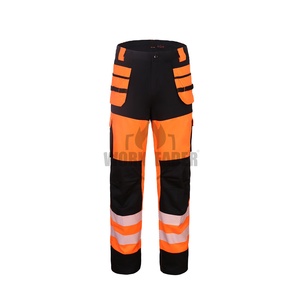
Explore our core OEM & ODM product line manufactured under strict ISO 9001 and international safety standards.
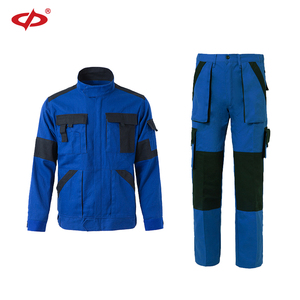
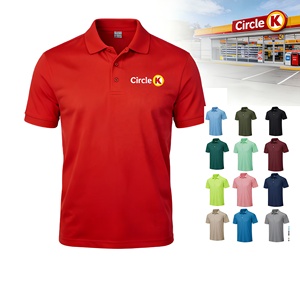
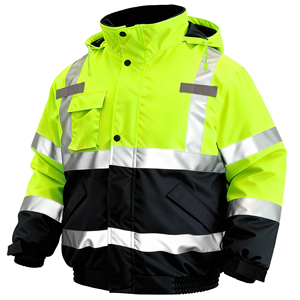
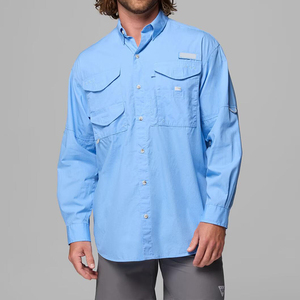
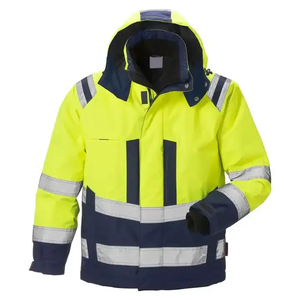
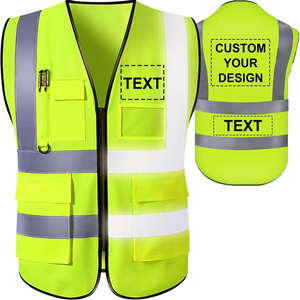
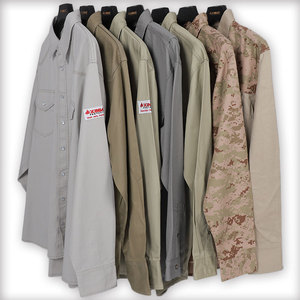
Combining Western engineering rigor and direct Chinese factory infrastructure to eliminate supply chain friction.
Unlike traditional industrial textile mills demanding thousands of units, our agile production lines accept custom workwear orders starting from just 50 pieces per style. Test new corporate drops or equip small teams without locking up capital in deadstock.
Every garment undergoes stringent four-tier verification: raw fabric tensile/colorfastness auditing, cut-panel alignment inspection, end-of-line dimensional tolerance checks against tech packs, and pre-pack AQL 2.5 audit. Zero compromises on worker safety gear.
Lack precise CAD specs? Our in-house apparel engineering team transforms basic concepts, physical samples, or sketches into tech-pack-ready files, complete with 3D digital simulation and detailed grading across XS to 6XL sizing charts.
Enjoy transparent Western-style communication and English-fluent technical merchandisers backed by direct ownership of our manufacturing plant in China. You gain low OEM pricing paired with strict contract law accountability.
From heavy-duty 300GSM Ripstop cotton and anti-static ESD synthetic weaves to custom Pantone shade matching, flame-retardant Nomex/treated cotton, and high-wicking spandex blends, we engineer textiles to your exact environment.
In the contemporary industrial supply chain, custom workwear is no longer treated merely as basic operational attire; it serves as a critical frontline defense mechanism, an emblem of corporate identity, and a driver of worker performance. As global buyers transition toward specialized procurement models, understanding the intersection of textile engineering, chemical safety finishing, and regional compliance standards becomes paramount.
Selecting the appropriate fabric composition requires balancing durability, breathability, weight (GSM), and protective coatings. China's mature textile ecosystem allows our facility to weave and finish bespoke textiles engineered for specific risk profiles:
| Fabric Classification | Typical Composition | Weight Range | Primary Certifications | Target Industrial Application |
|---|---|---|---|---|
| Ripstop Utility Canvas | 65% Poly / 35% Cotton | 240 - 320 GSM | ISO 13934 Abrasion | Construction, Logistics, Mining Cargo Pants |
| Flame Retardant (FRC) | 100% FR Treated Cotton / Aramid | 200 - 350 GSM | NFPA 2112 / UL / ASTM F1506 | Oil & Gas, Electrical Arc, Welding, Utilities |
| High-Visibility Weatherproof | 300D Oxford Polyester + PU Coating | 180 - 250 GSM | ANSI/ISEA 107 / EN ISO 20471 | Highway Maintenance, Airport Ramp, Security |
| Performance Work Shirt | 95% Poly / 5% Spandex + Anti-UV | 140 - 180 GSM | UPF 50+ / OEKO-TEX 100 | Field Technicians, Outdoor Surveying, Executive Workwear |
Industrial durability is determined by seam integrity and stress-point reinforcement. Our manufacturing process incorporates triple-needle lap seams using high-tensile core-spun threads, heavy-duty bar-tacking across all pocket openings, and articulated knee/elbow gussets that accommodate full range of motion. Furthermore, pocket architecture—such as specialized radio loops, concealed pen slots, and padded knee-pad inserts—is customized per client tech pack to maximize field utility.
Key technological, environmental, and commercial shifts shaping the industrial garment export sector between 2025 and 2030.
Environmental regulations like EU REACH and US PFAS restrictions are driving demand for fluorine-free durable water repellent (DWR) coatings and recycled GRS-certified PET fabrics. Enterprise buyers now mandate eco-audited supply chains that deliver heavy-duty performance without persistent chemical footprints.
Workforce demographics are shifting corporate preferences away from rigid traditional canvas toward flexible, moisture-wicking hybrid uniforms. Incorporating 4-way spandex stretch, mesh ventilation zones, and anti-odor silvadur treatments into standard work polos and trousers is now a primary retention tool for field workers.
Industrial uniform laundering programs increasingly demand washable UHF RFID tags sewn into inner seams. This allows automated tracking of garment lifecycles, wash-cycle limits for FR compliance, and personal allocation across large-scale factory, mining, and oilfield operations.
Global economic volatility has rendered multi-thousand-piece stock holding risky. Procurement managers are prioritizing manufacturing partners that offer low MOQs (50–100 pcs) alongside rapid lead-time replenishment models, enabling micro-capsule drops tailored to regional weather or contract wins.
Get clear, authoritative answers regarding order limits, certifications, sampling protocols, and international shipping.
Our minimum order quantity starts from 50 pieces per design. For specialized fabrications—such as custom-dyed Pantone colors or complex FR Nomex weaves—mill minimums may apply, but we always offer alternative stock-fabric colorways to keep your initial batch at 50 units.
Yes. We partner with accredited raw material testing facilities to supply certified Flame-Retardant (NFPA 2112 / ASTM F1506) and High-Visibility (ANSI/ISEA 107 / EN ISO 20471) textiles. Lab test reports and certificate copies are provided upon request prior to bulk production.
No. While a complete tech pack speeds up estimation, our internal engineering team can develop CAD drawings, size charts, and bill-of-materials (BOM) directly from physical sample garments, photo references, or hand-drawn design sketches.
Sample development and prototype approval generally take 2 to 3 weeks. Once the sample is approved, bulk manufacturing requires approximately 3 to 5 weeks depending on order volume, embellishment complexity, and fabric mill lead times.
We execute all branding options in-house, including high-density direct embroidery, industrial-wash screen printing, reflective heat-transfer film, woven neck labels, silicone pocket badges, and custom engraved metal buttons or heavy-duty YKK zippers.
We utilize standardized Pantone Matching System (PMS) color codes and maintain archival physical lab dips for every customer profile. Incoming raw fabric rolls are audited via spectrophotometer to ensure delta-E variances remain strictly within acceptable industrial thresholds.
Contact our technical merchandising team today to request a comprehensive product catalog, receive custom price quotes, or request fabric swatch books tailored to your enterprise needs.
Get Catalog