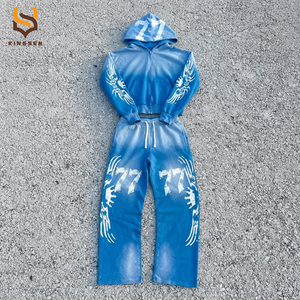
Explore our export-grade cut-and-sew manufacturing capabilities. Fully customizable specs, premium GSM fabric options, and low minimum order quantities (MOQ).
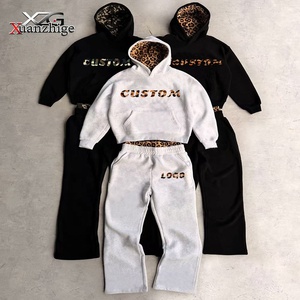
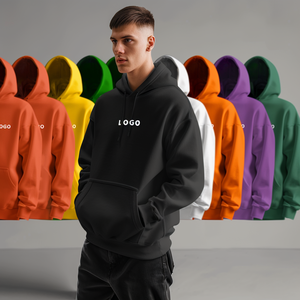
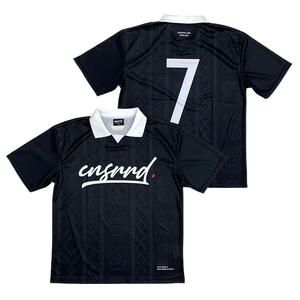

Combining Western client management and contract governance with China's unmatched textile supply chain efficiency.
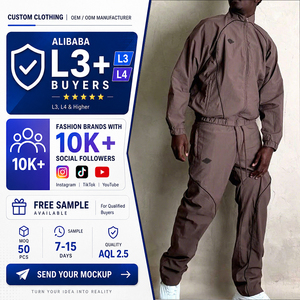
Traditional Asian garment mills demand 500 to 1,000 units per colorway, locking up inventory capital and forcing unverified style bets. We bridge the gap between boutique crafting and industrial scaling by offering genuine custom cut-and-sew lines starting at just 50 pieces per design. Test capsule drops, validate customer demand, and scale seamlessly into 5,000-unit bulk runs without switching factory lines.
Defects are eliminated at the source through rigorous gatekeeping: 1) Greige fabric shade & GSM inspection, 2) In-line panel seam integrity verification, 3) End-of-line size tolerance calibration, and 4) Final pre-pack audit before container sealing.
No CAD pattern files or spec sheets? Our senior pattern makers transform sketch concepts, mood boards, or sample physical garments into production-grade Tech Packs, complete with digital 3D fitting and multi-size grading logic.
We combine direct ownership of overseas manufacturing plants with dedicated English-speaking account managers and clear contractual frameworks. By eliminating redundant trading agents, buyers gain transparent bill-of-materials (BOM) pricing, direct production floor visibility, and zero miscommunication on specs or shipping deadlines.
In the highly competitive modern fashion industry, global apparel brands, streetwear labels, activewear conglomerates, and e-commerce enterprises face a core strategic challenge: balancing rapid product development, uncompromising material quality, low initial order capital risks, and reliable supply chain agility. China remains the global benchmark for private label apparel manufacturing, offering unprecedented textile vertical integration, specialized craftsmanship, and cutting-edge manufacturing automation.
However, navigating China’s private label manufacturing landscape requires a deep understanding of structural supplier models, quality control protocols, sustainable material certifications, and modern tech pack execution. This strategic guide provides procurement directors and fashion founders with the actionable insights required to vet, select, and scale with China's top OEM (Original Equipment Manufacturer) and ODM (Original Design Manufacturer) garment factories.
Core Sourcing takeaway: The most successful apparel brands do not simply search for the lowest unit cost. They partner with vertically integrated private label manufacturers that offer robust tech pack development, stringent AQL 2.5 multi-stage quality control, and flexible MOQ structures that safeguard working capital while accelerating time-to-market.
When procuring custom apparel from China, establishing the exact business engagement model determines your brand’s operational control, margin profile, and design speed:
OEM Manufacturing (Original Equipment Manufacturing): Ideal for established brands with fully realized Tech Packs, exact pattern CAD files, bill-of-materials (BOM) specifications, and graded measurement sheets. The factory executes cutting, stitching, trim application, and finishing strictly to your defined blueprint.
ODM Manufacturing (Original Design Manufacturing): Designed for emerging labels or retailers looking to launch curated seasonal collections rapidly. The factory provides pre-developed blank apparel blocks, proven fit patterns, and existing fabric stock, allowing brands to customize colors, washes, prints, embroideries, and custom branding trims with minimal lead times.
Full Package Production (FPP): A comprehensive end-to-end service model where the manufacturer handles everything from initial concept consultation, 3D Clo3D prototyping, custom fabric knitting/dyeing, custom trim sourcing, sample iteration, bulk cut-and-sew, and final export logistics to your destination warehouse.
The foundation of premium private label apparel lies in precise textile selection. Below is a structural reference matrix across popular custom streetwear, sportswear, and loungewear categories:
| Apparel Category | Standard Fabric Blends | GSM Weight Range | Key Performance Attributes | Recommended Customization |
|---|---|---|---|---|
| Heavyweight Streetwear Hoodies | 100% Combed Organic Cotton / 80-20 Fleece | 400 GSM - 500 GSM | Structure retention, low shrinkage, brushed fleece interior | Acid Wash, High-Density Puff Print, Custom Ribbing |
| Performance Tracksuits | Nylon Spandex / 100% Polyester Taslan | 180 GSM - 260 GSM | 3M Reflective trim, water-repellent (DWR), quick-dry mesh | Sublimation, Sealed Zip Pockets, Custom Drawcords |
| Classic OEM Men's Sweats | 60% Cotton / 40% Polyester Fleece Blend | 300 GSM - 360 GSM | Pill resistance, cost-efficiency, high color fastness | Screen Printing, DTG Print, Woven Patch Labels |
| Luxury Vintage Activewear | 100% French Terry Cotton | 350 GSM - 420 GSM | Loopback interior texture, heavy drape, breathable comfort | Pigment Garment Dye, Distressed Edges, Vintage Wash |
The modern global trade landscape demands greater operational agility and environmental accountability. Forward-thinking apparel brands are aligning with Chinese manufacturers that adopt four key macro trends:
A. Sustainable & Certified Eco-Textiles: Compliance with global standards such as GOTS (Global Organic Textile Standard), OEKO-TEX Standard 100, and GRS (Global Recycled Standard) is no longer optional. Leading factories utilize eco-friendly low-impact reactive dyes, waterless garment washing processes, and post-consumer recycled polyester blends.
B. Automated Precision Cutting & CAD Integration: Advanced factories have phased out manual lay-cutting in favor of automated laser and computer-controlled knife cutters. This technology ensures sub-millimeter precision across multi-layer fabric spreads, eliminating sizing variance across high-volume batch runs while significantly reducing fabric waste.
C. 3D Virtual Sampling (Clo3D / Browzwear): Digital twin sampling allows designers to visualize fabric drape, seam strain, fit adjustments, and artwork placement in photorealistic 3D rendering prior to cutting physical fabric. This cuts physical sampling cycles from 6 weeks down to a matter of days, saving thousands in sample shipping and material costs.
D. Transparent Supply Chain Traceability: European and North American customs regulations (such as ESG reporting standards and trade compliance laws) mandate total transparency from yarn spinning to final garment packing. Leading Chinese private label hubs provide complete chain-of-custody documentation for raw cotton, fibers, and hardware trims.
From initial design blueprint to doorstep delivery, every batch follows a systematic quality-controlled workflow.
Review of tech pack specs, vector artwork, target price parameters, GSM selection, Pantone TCX color matching, and order timeline confirmation.
Master pattern creation by industrial pattern cutters. Digital grading across XS to 3XL sizing charts with shrinkage allowance logic.
Mills custom-knit or dye fabric to exact composition and GSM specs. Woven labels, hangtags, custom drawcords, and zipper pulls are crafted.
A full pre-production physical sample (PPS) is cut, sewn, printed/embroidered, and dispatched via express courier for hands-on fit approval.
Upon sample sign-off, bulk production launches on dedicated sewing lines featuring specialized flatlock, overlock, and twin-needle stitching machines.
Comprehensive AQL 2.5 audit (measuring size specs, seam strength, thread trimming), polybagging, barcode tagging, and door-to-door freight dispatch.
Clear, uncompromised answers to critical procurement, financial, and technical questions.
Our baseline MOQ starts at 50 pieces per design for standard fabrics and colors. Custom pantone color dyeing or specialized mill-knit fabric developments may require higher thresholds (100–300 pcs) depending on mill minimums. We always provide low-MOQ alternative fabric routes to keep your initial product launch lean and cost-effective.
No. While a completed Tech Pack speeds up quoting, our in-house design engineering team regularly assists start-ups and growing brands. You can submit physical reference garments, high-resolution photos, or vector sketches, and we will build the tech spec, sizing measurement grid, and bill-of-materials for you.
As a operational benchmark: Initial pattern development and physical sample turnaround takes 2 to 3 weeks. Bulk mass production requires 3 to 5 weeks following sample sign-off, depending on design complexity, printing/embroidery techniques, and total unit quantity.
Every order is governed by a strict 4-Stage Quality Assurance protocol adhering to international AQL 2.5 standards. We audit raw materials upon arrival, conduct in-line checks during assembly, verify garment dimensions against approved specs post-ironing, and perform a final 100% pre-pack inspection before carton sealing.
Yes, we offer full private-label custom branding packages including custom woven neck labels, satin care labels, high-density silicone heat transfer logos, custom engraved metal aglets, branded drawcords, custom hangtags, and frosted polybags with custom warning prints and scannable barcodes.
Sample fees cover physical pattern development, master cutter labor, machine setup, and fabric consumption. We offer sample fee reimbursement credits applied directly to your bulk order invoice once production thresholds are met.
We support all international trade terms including EXW, FOB (Ningbo/Shanghai/Shenzhen), CIF, and DDP (Delivered Duty Paid) door-to-door via air freight, express courier (DHL/FedEx/UPS), or sea freight directly to your warehouse with all import customs clearance handled.
Partner with a reliable China private label manufacturer equipped with 50-piece low MOQs, 4-stage quality control, and dedicated technical support. Talk directly with our merchandising team today.
Contact Us