
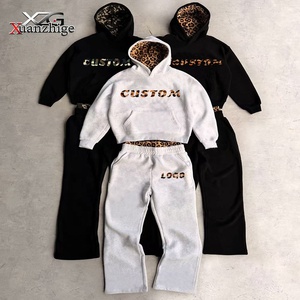
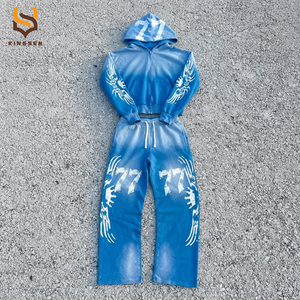
Custom High Quality Women's Custom Logo Leopard & Camo Lined 2-Piece Tracksuit, Oversized Crop Hoodie & Wide-Leg Jogger Set
Send an Inquiry
Explore our customizable OEM cut-and-sew garment lines. Engineered for high-street labels, luxury sportswear, and scalable e-commerce drops—manufactured from scratch with low MOQs starting from 50 pieces per design.

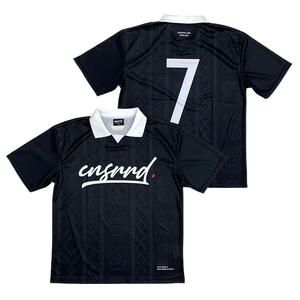

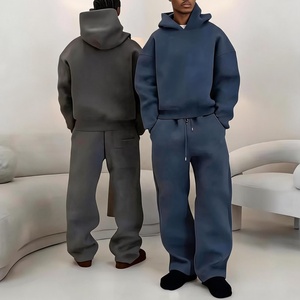
In the contemporary apparel ecosystem, the traditional boundary separating original equipment manufacturing (OEM) from private-label (White Label) customization has radically shifted. Modern fashion start-ups, direct-to-consumer (D2C) unicorns, and established global brands no longer look for simple assembly operations. They demand strategic manufacturing partnerships capable of delivering technical precision, rapid-turnaround prototypes, digital pattern development, and flexible production volumes without eroding capital efficiency.
Historically, legacy apparel factories operated under rigid high-volume requirements—forcing procurement directors to commit to 1,000 to 5,000 units per colorway. This obsolete procurement structure created immense financial risk, resulting in dead-stock inventory, high warehousing overheads, and severe cash-flow bottlenecks. Today, market agility dictates that brand survivability hinges on micro-batch drops, test-and-repeat models, and rapid iteration. Achieving this requires an advanced, technology-driven OEM infrastructure that handles bespoke cut-and-sew specifications from as low as 50 pieces per design while retaining corporate-grade quality standards.
This industry report outlines the structural framework of next-generation apparel manufacturing, detailing how our hybrid model—combining London-based client management with owned offshore technical facilities—bridges the gap between high-end design oversight and cost-efficient mass execution.
Understanding the macro-trends governing global apparel manufacturing is vital for procurement teams seeking a sustainable competitive advantage. Over the next five years, search intent data, supply chain metrics, and commercial buyers' behaviors point toward four core operational shifts:
High-performing apparel brands are abandoning monolithic ordering blocks. By utilizing initial production runs of 50–100 units, brands test real-market absorption, refine sizing based on consumer feedback, and reorder winning stock lines dynamically. This mitigates inventory holding costs by up to 68%.
The phase of physical sample iterations is rapidly declining. Advanced OEM factories utilize 3D CAD draping and virtual fitting software to simulate fabric tension, fall, and seam stretch before cutting cloth. This cuts prototype approval lead times from weeks to mere days while sharply reducing textile wastage.
Regulatory changes across Europe and North America (such as the EU Digital Product Passport) mandate strict traceability. Procurement standards now emphasize eco-certified organic cotton, GRS-certified recycled polyesters, non-toxic reactive dyes, and closed-loop water treatment in textile finishing facilities.
Hawthorn International stands at the forefront of modern garment manufacturing. Headquartered in Central London, England, with dedicated, wholly-owned offshore manufacturing infrastructure, we eliminate the intermediary agents that typically compromise communication, inflate margins, and blur accountability.
Contract directly under UK corporate law with an English-speaking account team in London, while gaining direct pricing access to our high-tech overseas sewing lines.
Don't have complete CAD technical drawings? Our in-house pattern masters translate physical samples, mood boards, or sketches into production-ready specification sheets.
From yarn selection to custom hardware, your garment remains 100% customisable even at the baseline 50-piece minimum order volume.
To eliminate defects and safeguard brand equity, our factory implements a stringent 4-stage internal auditing protocol for every bulk order prior to export shipment:
Incoming fabric bolts undergo four-point system visual inspection for shade consistency, elastane recovery, shrinkage potential, and GSM accuracy prior to automated cutting.
Quality floor supervisors continuously inspect stitching tension, seam allowance, flatlock structural alignment, and placement precision of logos during assembly.
Finished garments are pulled from line ends and measured against approved tech pack tolerance sheets (verifying chest width, sleeve length, collar drop within ±0.5cm).
Loose threads are trimmed, steam pressing is applied, hardware function (zippers, drawcords) is verified, and products are polybagged with barcode labels.
Selecting the optimal manufacturing route impacts product differentiation, gross margins, and brand equity. Compare the three primary sourcing methodologies below:
| Evaluation Metric | Hawthorn Bespoke OEM / ODM | Standard White-Label Blank | Off-the-Shelf Wholesale Stock |
|---|---|---|---|
| Design Originality | 100% Custom Patterns & Fits | Pre-Defined Template Blocks | Fixed Stock Garments |
| Minimum Order Quantity | Low (From 50 pcs / design) | 100–300 pcs | Bulk Carton Minimums |
| Fabric Weight & Blend Control | Bespoke Knitting & Custom GSM | Standard Stock Blends | Unalterable Pre-Dyed Fabrics |
| Branding Depth | Custom Tags, Trims, Hardware & Dyeing | Relabeling / Screen Print Only | External Over-Printing Only |
| Quality Control Standard | 4-Stage In-Line & Pre-Shipment Audit | Random Batch Inspection | Variable Wholesale Standards |
| Gross Margin Potential | High (Premium Brand Positioning) | Medium (Commoditized Fits) | Low (High Unit Cost Base) |
Partner with a UK-managed clothing manufacturer that respects your capital efficiency. Submit your tech packs, sketches, or design ideas today to receive a comprehensive factory quotation within 24 hours.
Send an Inquiry