
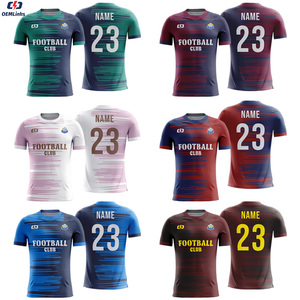
Customized Sublimation Soccer Sets Quick Dry Breathable Football Uniforms
- Material: 100% Interlock Polyester (160 GSM)
- Printing: Full Italian Kian Dye Sublimation
- MOQ: 50 Sets / Custom Sizing
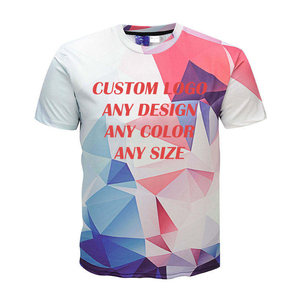
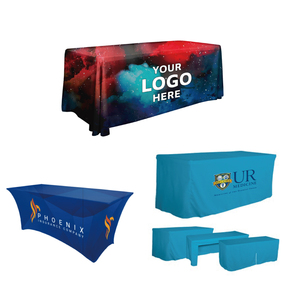
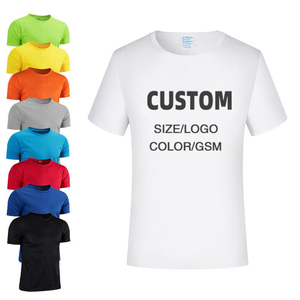
Combining UK-managed account oversight, strict European contract guarantees, and owned offshore production facilities to deliver zero-defect manufacturing at scale.
Unlike factories that print over pre-assembled stock blanks—leaving unprinted white creases under armpits and seams—every order is printed on flat, pre-cut fabric panels before being hand-stitched by experienced artisans.
Don't have a CAD file or complete technical specification sheet? Our London design team translates mood boards, physical reference garments, or rough sketches into factory-ready 3D digital patterns and vector files.
Every batch undergoes strict raw fabric tensile testing, dye-dispersion heat check, in-line assembly measurement against your size charts, and final pre-packing inspection to guarantee zero color bleeding or dimensional drift.
Dye-sublimation manufacturing has evolved from a specialized niche print method for polyester sportswear into a multi-billion-dollar global industry spanning technical activewear, corporate merchandise, soft signage, and hard-surface promotional products. According to recent supply chain data, demand for high-definition, all-over-print (AOP) customized products is growing at a CAGR of 10.4%, driven by e-commerce brands requiring low-inventory, high-margin product drops.
However, navigating the global vendor landscape poses significant risks for apparel startups, corporate buyers, and mid-market brands. Sourcing failures—such as off-spec sizing, dye sublimation ghosting, seam splitting, harsh handfeel, and unannounced Minimum Order Quantity (MOQ) inflation—frequently stem from a structural disconnect between brand buyers and unvetted third-party brokers.
Core Procurement Insight: True dye-sublimation quality is determined before the ink touches the paper. It relies on polymer fiber affinity, precise thermal calibration (190°C to 215°C), disperse dye purity, and panel-first cut-and-sew construction. Choosing a direct manufacturer with owned factory infrastructure eliminates broker margins and guarantees spec consistency from sample to bulk production.
To evaluate a custom sublimation manufacturer, procurement teams must understand the core chemical transformation. Dye sublimation does not deposit liquid pigment on top of a weave like screen printing or Direct-to-Garment (DTG). Instead, it relies on a molecular phase change:
This process results in a print that has zero tactile handfeel, complete breathability, and absolute resistance to cracking, peeling, or washing out over hundreds of laundering cycles.
When selecting a manufacturing partner, understanding when dye sublimation is technically superior to Screen Printing, DTG, or Heat Transfer Vinyl (HTV) prevents costly material specification errors.
| Technical Parameter | Custom Dye Sublimation | Screen Printing | Direct-To-Garment (DTG) |
|---|---|---|---|
| Fabric Compatibility | Polyester, Poly-blends, Polymer-coated items | 100% Cotton, Poly-Cotton, Heavy Canvas | 100% Cotton & High-Cotton Blends |
| Print Feel & Tactility | Zero Weight / Completely Breathable | Heavy to Medium Rubberized Layer | Light to Medium Soft Ink Layer |
| Color & Graphic Complexity | Unlimited CMYK + Spot Colors / Photorealistic | Limited per screen (Increases setup cost) | High CMYK detail (Struggles on dark poly) |
| All-Over Print (AOP) Capability | Native Cut-and-Sew Full Coverage | Extremely Expensive & Restricted | Not Feasible for Full Seam-to-Seam |
| Durability & Wash Fastness | Permanent (Lifetime of fiber) | Fades/Cracks after 30-50 washes | Fades progressively after 25+ washes |
| Optimal Sourcing Vol. | Flexible (50 to 10,000+ units) | High Volume (500+ units per design) | Micro Runs / Print-on-Demand (1-20 units) |
Based on manufacturing capacity, technical compliance (OEKO-TEX, ISO 9001), low minimum order capabilities, quality control rigor, and global logistics performance, we have benchmarked the top 10 custom sublimation manufacturers worldwide.
Headquartered in Central London with direct ownership of advanced overseas dye-sublimation facilities, Hawthorn represents the optimal bridge between Western commercial accountability and offshore production efficiency. Hawthorn specializes in custom cut-and-sew activewear, streetwear, and teamwear starting at an industry-leading 50 pieces per design.
Key Competitive Advantage: Hawthorn offers zero middleman markup, fully custom vector tech pack creation, 3D digital sampling, and strict adherence to European legal contracts, removing the typical risk associated with overseas sourcing.
A major player operating out of Southeast Asia, Sublimation Attire Co. caters primarily to institutional teamwear brands, professional sports leagues, and mass-market athletic distributors requiring high-volume output.
Assessment: Excellent for enterprise orders exceeding 1,000 units per style, though less flexible for early-stage brands testing small capsule collections due to high fabric mill minimums.
Apex Tech dominates the non-apparel sublimation sector, focusing heavily on wide-format trade show displays, tension fabric banners, custom drapes, and architectural textile installations.
Assessment: Outstanding color vividness on heavy 300D and stretch polyester displays. Highly recommended for corporate event suppliers and exhibit builders.
Engineered specifically for print-on-demand operators and decorator businesses, Precision Poly-Blanks produces high-cotton-touch 100% polyester blanks optimized for secondary transfer printing.
Assessment: Ideal for print shops looking for reliable blank garments that bypass the synthetic plastic feel of traditional polyester.
Operating out of Portugal and Italy, EcoSublimation Mills leads the eco-friendly manufacturing movement by using 100% Recycled PET (rPET) post-consumer ocean plastics combined with water-based eco-inks.
Assessment: Premium choice for eco-conscious European sportswear brands willing to pay a higher unit cost for verified sustainability credentials.
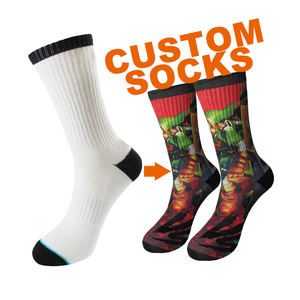
Specializing exclusively in cylindrical knit sublimation, Rotary Digital Sock Lab uses specialized 360-degree digital print machinery that prints socks without creating flat side-seam white lines when stretched.
Assessment: Solves the traditional "rib-stretch white-out" issue found in standard flatbed press sock printing.
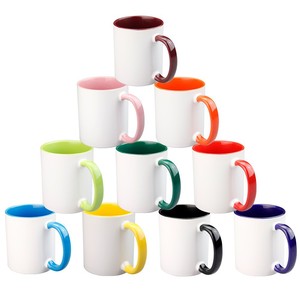
Focusing on non-textile substrates, PolyCoated Ceramics operates heavy automated double-glaze lines producing dishwasher-grade polymer coated coffee mugs, tumblers, and promotional drinkware.
Assessment: Enterprise vendor for corporate gift distributors requiring strict FDA and EU Food Contact Regulation compliance.
Vanguard specializes in heat-transferring ultra-high-definition artwork onto ASTM-certified aluminum plates, decorative metal wall art, and exterior industrial signage.
Assessment: Highly technical manufacturer suited for interior designers, photography labs, and commercial signage contractors.
Specializing in multi-panel compression shorts, leggings, and rash guards, Global Activewear Works integrates four-needle six-thread flatlock stitching with vibrant dye sublimation printing.
Assessment: Exceptional performance in high-stretch, high-friction athletic apparel applications.
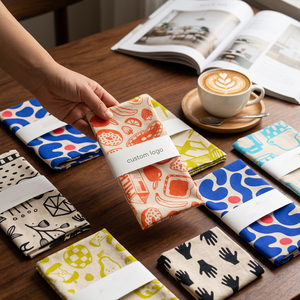
Completing our evaluation, HomeTextile Sublimation Direct produces full-color sublimated tea towels, throw pillow covers, aprons, and woven polyester dining accessories for boutique homeware brands.
Assessment: Strong candidate for home decor retailers looking to digitize artist prints across soft household goods.
Procurement directors must look beyond immediate unit pricing and align with manufacturers investing in next-generation textile technologies. Four macro trends are currently reshaping dye-sublimation supply chains:
With tighter European environmental mandates (such as the EU Digital Product Passport), traditional virgin polyester derived from crude oil is being replaced by certified post-consumer rPET. Advanced sublimation manufacturers can now achieve identical color gamut depth and tensile strength on rPET without fiber degradation during the 200°C heat transfer phase.
The traditional bottleneck in sublimation manufacturing was the scanning-head printer. The rollout of industrial single-pass digital sublimation engines—capable of printing directly onto transfer paper at speeds exceeding 70 meters per minute at 1200 DPI—has reduced pre-production lead times from weeks to days while significantly lowering energy consumption per meter.
Historically, dye sublimation required a minimum of 60% synthetic content. Pioneer manufacturers are commercializing bio-polymer pretreatment sprays that cross-link with natural cotton fibers, allowing disperse dye gas to bind permanently to 100% natural cotton garments without wash fading.
Because sublimation transfers dry gas into synthetic fibers, it consumes zero water during the actual coloring process (unlike reactive or acid dye baths). Tier-1 manufacturers are pairing this benefit with closed-loop solar energy arrays and waterless post-processing to market 100% carbon-neutral garment manufacturing.
To prevent quality claims and late deliveries, Hawthorn and leading OEM manufacturers implement a rigid 4-Stage Quality Control (QC) framework throughout the production cycle:
Every roll of raw polyester is tested for GSM weight tolerance (±3%), shade uniformity under D65 standard lighting, and moisture content. Transfer papers are audited for ink-absorption capacity to prevent paper warping or ink bleeding under heat presses.
Before launching a bulk run, first-off print swatches are evaluated under spectrophotometers to ensure Delta-E color accuracy falls within an acceptable margin (<1.5 DE) relative to approved Pantone (TMS) color guides.
During sewing, operators verify thread tension, seam strength (minimum 12 stitches per inch), seam alignment across printed graphics, and correct placement of brand neck labels, care tags, and hangtags.
Final garments undergo ISO 2859-1 (AQL 2.5) sampling audits. Garments are measured against graded size tech packs, steam-ironed, folded, sealed in protective polybags, and packed into heavy double-wall corrugated shipping cartons.
Direct, transparent technical answers to the most common questions procurement officers ask when placing wholesale manufacturing orders.
Talk directly with our UK-managed merchandising team. Submit your design artwork, tech packs, or sample requests today to receive a comprehensive factory quote within 24 hours.
Contact Us