The global textile and apparel manufacturing sector is undergoing an unprecedented structural transition. Modern fashion enterprise founders, sourcing directors, and private-label apparel managers no longer evaluate manufacturing partners purely on unit price metrics. In the modern regulatory environment—shaped by stringent European Union Green Claims directives, extended producer responsibility (EPR) mandates, and heightened consumer scrutiny—the selection of a dedicated Organic Clothing Manufacturer & Factory is the single most critical decision determining brand equity, margins, and supply chain security.
This industry benchmark whitepaper analyzes the essential operational paradigms required to engineer compliant, premium-quality organic apparel lines. By leveraging advanced pattern drafting, 3D CAD pre-production prototyping, low-impact fiber chemistry, and hybrid agile production management, top-tier organic apparel factories bridge the gap between small-batch boutique launches (starting at 50 pieces per design) and automated high-volume bulk production.
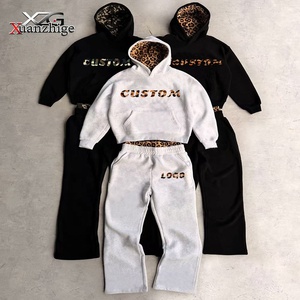 Tracksuits
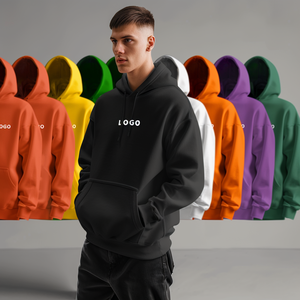 Heavy Fleece
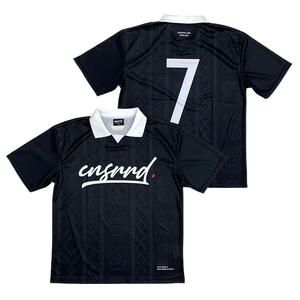 Sportswear
 Streetwear
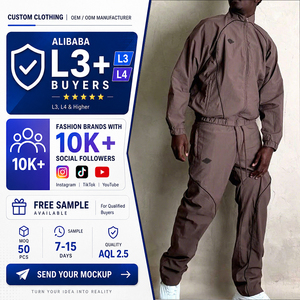 Outerwear
 Tech Fleece
 Custom Cut & Sew
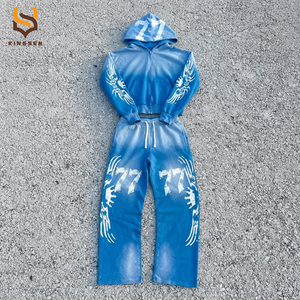 Acid Wash
The global organic clothing manufacturing landscape is transitioning from voluntary environmental stewardship to mandatory structural compliance. Sourcing directors who navigate this evolving ecosystem must adapt to four transformative macro trends shaping apparel production over the next decade:
Under incoming EU regulations, every organic garment sold globally will soon require an auditable digital record. Modern organic clothing factories are embedding QR-coded DPP tags directly into woven side-seam labels, providing immutable proof of raw fiber origin, GOTS transaction certificates (TCs), dye-house compliance, and factory worker wage audits.
Beyond traditional organic cotton, forward-thinking manufacturers are securing supply chains anchored in Regenerative Organic Certified (ROC) farming. ROC practices actively sequester carbon into topsoil, restore local biodiversity, and eliminate synthetic chemical run-off, representing the next frontier past baseline GOTS compliance.
The traditional model of placing massive 5,000-unit bulk orders 9 months in advance is dying. High-growth streetwear and activewear brands are leveraging agile micro-batch production (50–300 pcs) to validate capsule collections on social channels before initiating just-in-time automated reorders, reducing deadstock risk by up to 78%.
Water scarcity and chemical pollution mandates have pushed certified organic factories to integrate Zero Discharge of Hazardous Chemicals (ZDHC) Level 3 compliant dye mills. Innovations include supercritical CO2 waterless dyeing, natural botanical color extraction, and closed-loop bio-enzyme washes that replace traditional toxic acid washing.
Selecting the precise textile composition dictates garment hand-feel, tensile durability, print compatibility, and true lifecycle sustainability. Below is an engineering comparison matrix used by our technical apparel team to guide private label clients:
| Textile Specification | 100% GOTS Organic Cotton | Recycled Cotton / Poly Blend | Organic Hemp / Cotton Blend | Conventional Combed Cotton |
|---|---|---|---|---|
| Environmental Footprint | 91% less water; zero synthetic pesticides. | Diverts post-industrial waste from landfills. | High carbon sequestration; low soil depletion. | High chemical input; extensive water depletion. |
| Tensile & Bursting Strength | High (Long-staple fibers preserved intact). | Moderate (Shorter recycled fiber lengths). | Exceptional (3x stronger than virgin cotton). | Standard baseline commercial strength. |
| Dye Affinity & Color Fastness | Excellent with Low-Impact Fiber Reactive Dyes. | Requires specialized eco-poly disperse dyes. | Rich earthy texture; absorbs natural pigments well. | Standard affinity; often heavily bleached. |
| Ideal Apparel Categories | Heavyweight Hoodies, Babywear, Tees, Loungewear. | Eco Activewear, Fleece Sweatsuits, Outerwear. | Utilitarian Streetwear, Oversized Overshirts. | Fast-fashion volume promotional merchandise. |
| Standard GSM Range | 180 GSM (Tees) to 500 GSM (Heavy Fleece) | 240 GSM to 420 GSM Technical Knit | 220 GSM to 450 GSM Canvas & Jersey | 140 GSM to 300 GSM Commercial Fleece |
Sourcing garment manufacturing overseas often introduces risks: language barriers, unpredictable lead times, opaque quality control, and legal vulnerability. Our modern hybrid operational model completely eliminates these pain points.
With head offices located in London and dedicated ownership of our offshore manufacturing lines, we offer a seamless, end-to-end custom cut-and-sew solution backed by UK contract law and native English-speaking account managers.
Our in-house apparel engineers transform your raw sketches, mood boards, or sample garments into digitized, production-ready tech packs, full bill of materials (BOM), and 3D virtual fittings to eliminate pattern errors before fabric cutting.
We source or custom-knit fabrics per order. Choose exact yarn counts, GSM weights, organic certifications, custom Pantone color dyeing, and bespoke finishing processes (peached surface, bio-wash, micro-brushing).
Before bulk production commences, we hand-craft a physical pre-production prototype sample for your review. Test the fit, drape, seam elasticity, embroidery detail, and woven brand labels with full revision support.
Our production floor utilizes computerized laser and knife cutting equipment, optimizing marker layout to cut fabric wastage down to under 3%, reinforcing our zero-waste manufacturing ethos.
Every single unit undergoes rigorous 4-stage inspection: (1) Raw fabric flaw audit, (2) In-line stitch and seam strength check, (3) Post-assembly dimensional tolerance measurement, and (4) Pre-pack thread trimming & needle inspection.
We manage all export documentation, tariff classification, customs clearance, and deliver poly-bagged, carton-packed goods straight to your warehouse via trusted express courier or door-to-door ocean freight.
Our standard minimum order quantity starts from just 50 pieces per design/style. This MOQ can be split across standard sizing runs (e.g., S, M, L, XL, XXL). For specialized custom Pantone fabric dyeing or complex technical knit constructions, minimums may vary depending on mill requirements, but we always present low-MOQ alternative fabric routes to accommodate scaling fashion start-ups.
Yes. We source our organic cotton fibers strictly from GOTS (Global Organic Textile Standard) certified spinners and mills. We also provide OEKO-TEX Standard 100 certification ensuring that all dyes, zippers, drawcords, and metal hardware are 100% free from harmful heavy metals, pesticides, and toxic chemical residues. Transaction Certificates (TCs) can be provided with bulk orders.
While client-provided tech packs accelerate the sampling timeline, they are not mandatory. If you only have physical reference garments, mood boards, or rough concept sketches, our dedicated apparel design and pattern-making team will construct digitized tech packs, complete with graded measurement specs, stitching guidelines, and bill of materials (BOM) for your approval.
Pattern development and physical master sampling typically take 2 to 3 weeks upon tech pack approval. Bulk production requires approximately 4 to 6 weeks after you approve the pre-production sample. Precise production timelines depend on fabric mill availability, custom dye requirements, and order volume, with full milestone schedules confirmed prior to production start.
Every garment we manufacture is cut and sewn to order from scratch. We do not sell pre-stocked, white-label blanks off the shelf. However, we maintain an extensive portfolio of pre-developed master blocks (oversized hoodies, relaxed tees, flared sweatpants) that you can utilize to accelerate production while fully customizing fabric weight, colorway, branding, and hardware.
Our factory operates under an AQL 1.5 (Acceptable Quality Limit) standard. Approved pre-production samples are sealed and assigned directly to the line supervisor as the benchmark standard. During manufacturing, inline auditors verify measurements against the approved size chart at every assembly station, catching any variance before final packaging.
Partner with an industry-leading UK-managed organic clothing manufacturer. Get instant access to custom eco-fabric swatches, pricing schedules, tech pack assistance, and digital catalogs.
Get Catalog