Explore our export-grade sustainable garments engineered from GRS-certified recycled polyester (rPET), upcycled post-consumer organic cotton, and closed-loop modal blends.

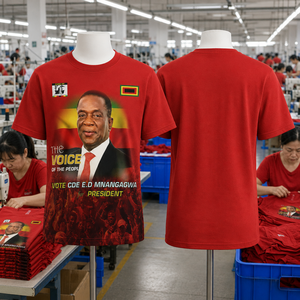
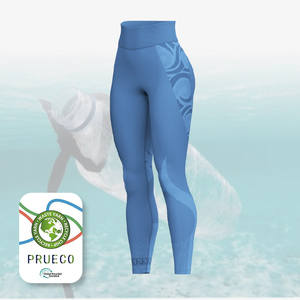
An authoritative analysis on navigating sustainable procurement, regulatory compliance, zero-landfill textile recycling, and low-MOQ supply chain optimization for modern apparel brands.
The global textile sector is undergoing a structural paradigm shift driven by stringent decarbonization targets, consumer demand for environmental transparency, and tightening European Union legislation (including the Digital Product Passport initiative and Extended Producer Responsibility regulations). As a leading China Recycled Apparel Supplier & Exporter, our operational framework bridges Western corporate compliance, technical design rigor, and transparent contract law with China's unrivaled industrial infrastructure in recycled fiber synthesis, precision spinning, and automated garment assembly.
By maintaining centralized control over pattern making, technical specification development, yarn sourcing, dyeing, and automated cut-and-sew production, we eliminate the traditional inefficiencies and opacity of middle-man agents. Every garment line produced—whether a 50-piece capsule collection or a 50,000-piece retail order—is executed under strict ISO quality standards and complete Global Recycled Standard (GRS) chain-of-custody documentation.
Verification is the bedrock of sustainable enterprise. We provide full Transaction Certificates (TC) for every shipment, backing all environmental claims with audited proof from source polymer to finished garment.
Analyzing key technological, regulatory, and market shifts shaping global garment supply chains over the next decade.
Historically, the vast majority of recycled polyester apparel relied on post-consumer PET beverage bottles. However, regulatory authorities and environmental organizations are demanding a shift toward closed-loop Textile-to-Textile (T2T) recycling. Advanced chemical depolymerization and enzymatic breakdown now allow post-industrial fabric scraps and post-consumer garments to be converted back into virgin-quality polyester monomers without mechanical degradation.
Under upcoming EU regulations, apparel imported into European markets will require a Digital Product Passport accessible via scannable QR codes or embedded RFID tags. Procurement heads must partner with China exporters capable of providing granular data regarding raw material origin, chemical inputs, carbon intensity, water usage metrics, and labor compliance standardizations across all tiers of manufacturing.
Pure mechanical recycled cotton often suffers from reduced staple fiber length, compromising tensile strength and pilling resistance. Modern apparel engineering resolves this by creating composite hybrid yarns—blending pre-consumer recycled cotton with long-staple organic cotton, closed-loop Tencel™ Modal, or recycled elastane to ensure high durability and premium handfeel.
| Fabric Category | Carbon Footprint (vs Virgin) | Water Consumption | Tensile & Pilling Grade | Regulatory Compliance |
|---|---|---|---|---|
| 100% Virgin Polyester | High (5.4 kg CO2e/kg) | Moderate (60 L/kg) | Grade 4.5 - 5.0 | Subject to Future Carbon Taxes |
| Mechanical rPET (Bottles) | -55% Reduction | Low (15 L/kg) | Grade 4.0 - 4.5 | GRS / RCS Certified |
| Chemical T2T Recycled Poly | -65% Reduction | Ultra-Low (8 L/kg) | Grade 4.5 - 5.0 (Virgin Match) | EU DPP Fully Compliant |
| Recycled Cotton + Modal Blend | -72% Reduction | Near Zero (Closed Loop) | Grade 4.2 - 4.8 | GOTS & GRS Dual Certified |
How state-of-the-art yarn engineering, waterless dyeing, and 3D digital sampling elevate recycled apparel performance.
One of the primary challenges in recycled apparel manufacturing is maintaining tactile softness and structural integrity without relying on virgin petroleum additives. Through advanced melt-spinning filtration and micro-denier extrusion, our China facilities produce recycled polyester filaments as fine as 0.5 denier. These ultra-fine microfibers create fabrics with superior drape, silky handfeel, natural breathability, and exceptional moisture-wicking properties comparable to luxury virgin silk and premium technical activewear fabrics.
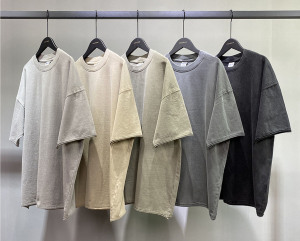
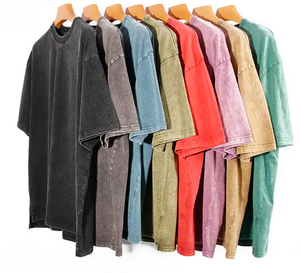
For heavy streetwear applications—such as our 280 GSM to 450 GSM vintage acid-wash hoodies and tees—we combine ring-spun recycled cotton yarn with high-density knit structures to eliminate garment shrinkage and preserve fit integrity across multiple wash cycles.
Traditional textile dyeing consumes up to 100 liters of water per kilogram of fabric and generates significant chemical wastewater. Our green supply chain options utilize zero-water supercritical carbon dioxide (scCO2) dyeing technologies for synthetic recycled fabrics. Under high pressure, CO2 acts as a fluid medium that dissolves dyes directly into the synthetic polymer matrix with zero water consumption, zero chemical effluent, and 98% dye absorption efficiency.
To reduce physical sample iterations, paper waste, and fabric scrap during product development, our engineering team leverages 3D CLO digital garment rendering. Clients can review digital fit sessions, test fabric drape, modify sizing specifications, and approve colorways in real time prior to physical cutting—slashing sampling lead times from weeks to days.
Traditional Asian garment mills demand minimum order quantities of 1,000 to 5,000 pieces per colorway, creating immense inventory risk and cash flow strain for emerging brands. We have re-engineered the traditional production line into modular, highly agile cut-and-sew cells. By stocking pre-milled, GRS-certified greige fabrics in various weights and knit constructions, we offer fully custom OEM/ODM production starting from just 50 pieces per design, enabling fashion labels to validate market demand with minimal risk.
Combining competitive offshore manufacturing efficiency with rigorous, multi-stage quality control protocols.
Spectrophotometer color matching, fiber purity testing, and GRS TC document verification upon raw material arrival.
Precision digital pattern cutting calibrated to custom size charts with tight dimensional tolerance thresholds.
Continuous monitoring of seam elasticity, tension integrity, print alignment, and needle stitch density during assembly.
Rigorous lab testing for dimensional stability (AATCC 135 standard), pilling resistance, and colorfastness (ISO 105-C06).
100% garment inspection for loose threads, hardware operational checks, loose trims, and branding placement accuracy.
Final eco-packaging, custom hangtag attachment, barcode labeling, and seamless door-to-door DDP air/sea freight delivery.
Get immediate clarity on certifications, MOQs, custom branding, shipping logistics, and quality control procedures.
All our recycled polyester, recycled cotton, and bio-blend fabrics are certified under the Global Recycled Standard (GRS 4.0) or Recycled Claim Standard (RCS). For every order shipped, we issue an official Transaction Certificate (TC) issued by accredited certification bodies (such as Control Union or Intertek). This TC details the exact volume, lot number, and supply chain origin of the recycled material, providing legally compliant proof for marketing and customs regulatory audits.
Our standard minimum order quantity starts at 50 pieces per design/colorway for garments utilizing our stocked GRS-certified greige fabrics. For highly specialized custom-knitted fabric compositions, custom Pantone dyeing, or specialized Jacquard knits, the MOQ may range between 100 to 300 pieces depending on yarn mill minimums. We always provide low-MOQ alternative fabric routes during initial quotation.
Thanks to modern micro-denier spinning and ring-spun yarn processing, our GRS-certified recycled polyester offers identical softness, tensile strength, moisture-wicking ability, and color vibrancy when compared to virgin synthetic fibers. For recycled cotton, we blend post-consumer regenerated cotton fibers with long-staple organic cotton or Modal to ensure superior seam strength, low pilling, and a soft, premium handfeel.
We provide full-service OEM/ODM custom garment manufacturing. Customization capabilities include water-based screen printing, DTG (Direct-to-Garment), high-density embroidery, all-over heat transfer sublimation, silicone activewear logos, vintage acid/stone washing, custom-branded neck labels (woven or printed), recycled paper swing tags, drawcords, custom metal hardware, and 100% compostable polybags.
Sample development and prototype delivery generally take 7 to 14 business days after tech pack and artwork approval (or 3D digital sample approval). Once the pre-production sample is approved by your team, bulk manufacturing requires approximately 15 to 25 business days, depending on order complexity and total unit volume.
Yes. If you do not possess complete technical specification packs, our in-house apparel engineering team can generate comprehensive tech packs, graded size charts, bill of materials (BOM), and stitch specification files directly from your design sketches, mood boards, or physical reference garments.
We provide full global logistics management, including Express Air Courier (DHL/FedEx/UPS), Air Freight, and Sea Freight. We specialize in DDP (Delivered Duty Paid) shipping services to North America, the European Union, the UK, Australia, and the Middle East. Under DDP terms, our freight team handles all export customs clearance in China, import tariffs, VAT/taxes, and final door-to-door delivery with no unexpected charges.
Every bulk production run is executed strictly against your physically signed and approved Pre-Production (PP) sample. Our factory utilizes standardized digital tech packs, automated laser cutting machines, automated sewing templates, and a 4-stage ISO quality inspection process. All fabric lots undergo physical lab testing for colorfastness, seam slippage, and wash shrinkage prior to sewing assembly.
Partner with China's leading GRS-certified recycled apparel supplier. Receive technical consultation, fabric swatch cards, and instant factory quotations for your upcoming collection.
Inquire Now