Explore our export-ready, customizable apparel lines engineered to conform strictly to Tokyo sizing profiles, Japanese Inspection Standards (Kenpin 檢品), and premium hand-feel expectations.
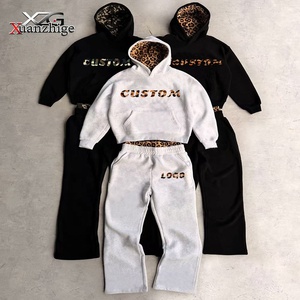
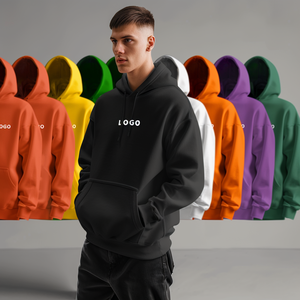
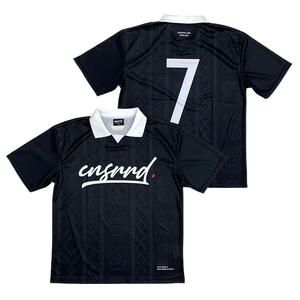

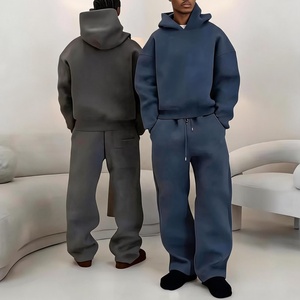
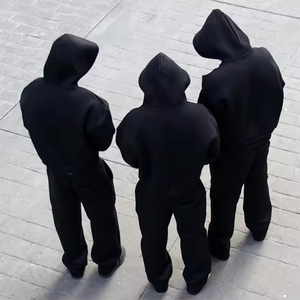
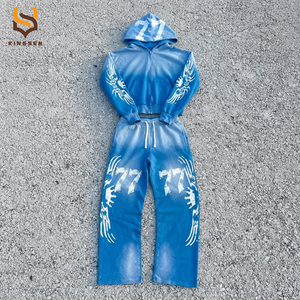
Sourcing apparel for the Japanese fashion market demands significantly higher engineering rigor than standard Western retail routes. Japanese consumers evaluate garments through a strict lens of tactile quality, flawless finishing, exact sizing proportions, and structural longevity.
Unlike EU or US markets where basic dimensional stability is acceptable, exporting to Japan requires compliance with stringent JIS L-1096 (Testing Methods for Woven and Knitted Fabrics) and JIS L-0801 (General Principles for Colorfastness Tests). Our manufacturing plants operate dedicated laboratory testing for color rubbing fastness (Krockmeter Grade 4-5 dry/wet), pilling resistance (Martindale Class 4+), and dimensional change after laundering (< 2.5% variance).
In Japanese apparel retail, a single broken needle fragment inside a garment panel causes catastrophic brand liability and store recalls. We implement full Hashima X-Ray & Conveyer Magnetic Needle Inspection across 100% of finished goods prior to export packaging. Every carton is sealed with a unique tamper-evident Kenpin pass certificate before air or ocean freight dispatch to Ports of Tokyo, Yokohama, or Osaka.
From Shibuya streetwear boutiques to Ginza luxury lifestyle labels, product design requires localized specs. We bridge offshore manufacturing efficiencies with local Japanese fashion aesthetics.
Current Japanese urban streetwear trends heavily favor boxy, drop-shoulder silhouettes with compact, dense neck ribbing. Standard Western 280 GSM fleece feels insufficient; Japanese streetwear labels request 400 GSM to 500 GSM custom-combed French Terry cotton with pre-shrunk vintage acid washes and zero yarn contamination.
Modern Japanese urbanites prioritize multifunctional activewear suitable for train commutes and boutique gym sessions. We develop lightweight 3M reflective nylon windbreakers and poly-spandex joggers featuring silent movement fabric tech, concealed YKK Japan water-resistant zippers, and anti-static anti-dust coatings.
Exporting Western size specs directly to Japan leads to extremely high return rates. Japanese fit patterns mandate shorter sleeve lengths (by 1.5–2.5 cm), adjusted chest-to-waist ratios, smaller neck openings, and modified shoulder slope angles. Our pattern masters digitize custom Japanese size charts for instant production scaling.
Combining UK-grade client management & legal contract integrity with our 100% owned offshore high-precision manufacturing facility.
To mitigate inventory risk in seasonal collections, Japanese boutique brands demand small production drops. While traditional factories demand 500–1,000 units per colorway, our facility supports full custom cut-and-sew orders starting at just 50 pieces per design, allowing rapid market testing without tying up working capital.
Don't have complete technical drawings? Send us a reference sample, physical garment, or preliminary design sketch. Our in-house tech team builds accurate 2D/3D spec sheets, graded size charts, cut-and-sew marker layouts, and Bill of Materials (BOM) to ensure repeatable accuracy across future order re-runs.
Every garment passes through four physical checkpoints: 1. Raw Fabric Inspection (shade card matching & fault mapping); 2. In-Line Seam Integrity Checks; 3. End-of-Line Dimensional Measurement Audit; 4. Final Pressing, Tagging, and Packaging Audit under dust-free conditions.
We own and manage our garment production line. You communicate with dedicated English-speaking merchandisers working directly with our factory floor. Eliminating third-party trading agencies lowers per-unit FOB/CIF costs while ensuring total transparency on lead times.
Visualizing garment drape, tension, and fit on virtual avatars to finalize specs before cutting physical cloth.
Precision pattern cutting adjusted specifically for Asian body proportions and targeted fit profiles.
Milling organic cotton, CVC fleece, or tech synthetics with custom reactive dyeing matched to Pantone TPX/TCX cards.
Delivering physical pre-production prototypes to Tokyo or buyer headquarters for fit approval and trim check.
Combining automated laser fabric cutting for 100% precision with skilled manual seam assembly.
Hashima magnetic metal detection, Japanese wash care label attachment, and door-to-door CIF delivery.
A side-by-side technical evaluation demonstrating why standard global suppliers fail Japanese retail inspections—and how our specialized pipeline guarantees compliance.
| Evaluation Parameter | Standard Generic OEM Supplier | Our Japan Export Protocol |
|---|---|---|
| Needle Inspection (检针) | Random Hand Sweep | 100% Hashima Dual-Head Magnetic Scanner |
| Sizing Specs & Tolerances | ± 1.5 cm to 2.0 cm (High Variance) | ≤ ± 0.5 cm Strict Tolerance |
| Colorfastness Standard | ISO / Basic Test (Grade 3) | JIS L-0801 Certified Grade 4-5 |
| Minimum Order Quantity (MOQ) | 500 - 1,000 Pcs per style | Flexible 50 Pcs per design |
| Care Label & Packaging | Standard English Polybag | JIS L-0001 Compliant Labels + JAN Barcode Tagging |
| Quality Control Standard | Single Final Spot-Check | 4-Stage In-Line & Kenpin Audit System |
Direct technical answers regarding compliance, shipping to Japan, customized labeling, and production timelines.
Every single piece of apparel manufactured in our facility passes through a calibrated Hashima magnetic needle detector (0.8mm ferrous ball sensitivity standard) prior to final polybag packing. We issue official Kenpin inspection logs with every shipment to pass Japanese customs clearance effortlessly.
Yes. We print and stitch Japanese Household Goods Quality Labeling Law compliant tags (including Japanese text for fabric composition, washing instructions under JIS L-0001 standard icon sets, importer details, and country of origin mark).
Digital 3D specs and physical sample creation take 2–3 weeks. Once the pre-production sample is approved, bulk manufacturing requires 3–5 weeks depending on fabric customisation. Air freight to Haneda/Narita takes 3–5 days, while ocean shipping to Yokohama/Osaka ports takes approximately 10–14 days.
Yes! Our 50-piece MOQ per design allows you to ratio size distributions (e.g., 10x Small, 20x Medium, 15x Large, 5x XL) to fit your Japanese market customer profile without extra surcharges.
Absolutely. We source GOTS-certified organic cotton, Recycled Polyester (rPET), Oeko-Tex Standard 100 fabrics, and low-impact reactive dyes meeting eco-conscious consumer demand across Tokyo and Kyoto boutiques.
Because we operate under strict UK legal framework contracts with complete 4-stage quality control, our defect rate remains well under 0.5%. In the rare event of a manufacturing fault, our guarantee provides immediate remanufacturing or financial credit protection.
Partner with a verified, precision apparel development exporter. Submit your design sketches, tech packs, or reference garments today for an instant FOB/CIF quote and production schedule assessment.