Explore our high-demand OEM/ODM product capabilities engineered for global apparel brands, streetwear labels, and B2B importers.


The global textile and apparel procurement landscape has undergone a monumental paradigm shift over the past decade. For international clothing brands, retail chains, emerging streetwear labels, and private-label buyers, searching for reliable Garment Sourcing Factories & Exporters in the Bangladesh market is no longer merely a exercise in seeking the lowest cut-make-trim (CMT) cost. It has evolved into a strategic imperative focused on supply chain resilience, ethical compliance, precision fabric engineering, and adaptive minimum order quantities (MOQs).
Bangladesh stands as the world’s second-largest exporter of ready-made garments (RMG), backed by massive industrial infrastructure, advanced spinning mills, and highly specialized garment manufacturing ecosystems across Dhaka, Chittagong, and Gazipur. However, traditional procurement mechanisms in Bangladesh have historically presented severe entry barriers for small-to-medium enterprises (SMEs) and fast-scaling digital brands. Standard factory floors in the region typically mandate high production thresholds—often starting from 3,000 to 5,000 units per colorway—creating significant inventory liability and capital lock-up for modern agile labels.
To bridge this structural gap, modern hybrid manufacturing architectures—combining UK-managed operational compliance, technical merchandising, and localized production execution—have emerged. By integrating Western account oversight with specialized offshore manufacturing infrastructure, international buyers can now access Bangladesh's cost efficiencies while enjoying ultra-flexible MOQs starting from just 50 pieces per design, bulletproof quality management, and transparent technical documentation.
Understanding the internal dynamics of Bangladesh garment exporters requires a technical analysis of the region's vertical integration. Unlike many alternative sourcing destinations that rely heavily on imported grey fabrics, Bangladesh possesses extensive domestic knitwear spinning, dyeing, and finishing infrastructure. This vertical depth delivers profound procurement advantages across several apparel categories:
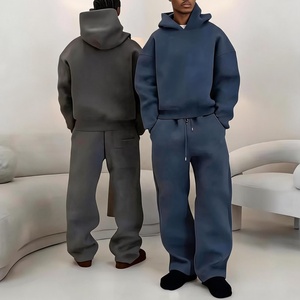
Local circular knitting mills produce premium French Terry, Brushed Fleece, and CVC cotton blends ranging from lightweight 180 GSM jersey to heavy 450 GSM winter fleece, ideal for oversized hoodies and streetwear tracksuits.
Modern exporters in Bangladesh have invested heavily in synthetic blend machinery, allowing for seamless integration of moisture-wicking polyester, elastane, 3M reflective trims, and nylon windbreaker fabrications.
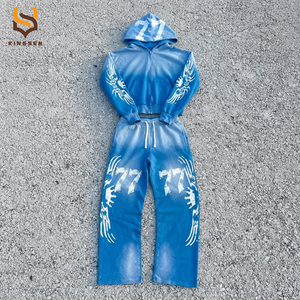
Bangladesh leads in sustainable wet-processing technologies, offering specialized acid washing, garment dyeing, stone washing, silicone softeners, and vintage distressed treatments without violating environmental discharge benchmarks.
Different apparel categories present distinct technical challenges during production. Successful sourcing directors map their product specs against specific local factory capabilities. Below are the primary application scenarios in the current export market:
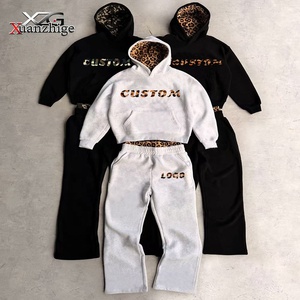
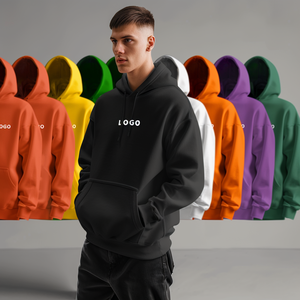
Streetwear brands requiring custom cropped hoodies, acid-washed flared joggers, and heavy fleece sweatsuits benefit hugely from local fabric milling. Because fabric mills require substantial yarn weight to set up custom knits, sourcing through traditional Bangladesh channels usually forces brands to buy thousands of units. Our specialized manufacturing structure bypasses this by aggregating fabric runs across managed lines, giving small brands access to custom 400GSM cotton fleece from 50 pieces per style.
Production of functional nylon outerwear, 3M reflective tracksuit sets, and technical windbreakers requires specialized seam-sealing machinery, automated laser cutting, and precise zipper insertion. Exporters handling these tech specs utilize automated cutting beds to preserve design geometry, preventing alignment torque in multi-panel athletic sets.
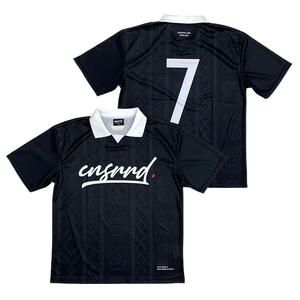
Retro football jerseys, vintage soccer sets, and athletic uniforms demand vibrant dye-sublimation print fidelity alongside high-tensile stitching. Bangladesh exporters equipped with automated CAD pattern grading ensure that intricate vintage paneling scales perfectly across XS to 3XL size breakdowns while maintaining structural integrity during high-intensity athletic use.
To maintain a competitive edge, procurement officers and apparel brand founders must align their supply chain strategy with macro shifts occurring within the Bangladesh manufacturing ecosystem:
While sourcing directly from offshore factories promises attractive unit pricing, international buyers frequently encounter critical pain points: miscommunicated technical specs, unreliable quality control, unexpected MOQ spikes, and legal vulnerability under foreign jurisdiction. Hawthorn International resolves these challenges through a uniquely structured hybrid manufacturing model:
Clients brief and contract with a registered UK entity (London head office) under English commercial law, eliminating foreign legal risk and ensuring total accountability for product delivery.
We do not act as unvetted brokers or agents. Production runs directly through our owned offshore facility, placing pattern makers, merchandisers, and machine operators under a unified quality system.
We eliminate inventory risk for emerging brands by offering fully custom, cut-and-sew garment production starting at just 50 pieces per style—complete with custom fabric weights, dyeing, and branding.
No formal tech specs? Our design team converts your sketches, images, or physical sample garments into measurable CAD pattern tech packs, complete with graded spec sheets and bills of materials.
Every order processed through our supply ecosystem follows a rigorous, documented production path to guarantee fidelity to your original design specification:
3D digital design preview, tech pack audit, commercial target alignment, and spec validation.
Bespoke pattern drafting from physical reference units or custom sizing charts across all target sizes.
Custom yarn selection, weight verification (GSM), handfeel treatment, and exact Pantone lab-dip color matching.
Production of a full pre-production prototype sample delivered to your door for fit, fabric, and detail approval.
Hand-cut and precision-stitched bulk assembly adhering strictly to the sealed physical sample baseline.
Rigorous multi-point inspection (fabric, in-line, end-of-line, final pre-pack) before door-to-door courier dispatch.