
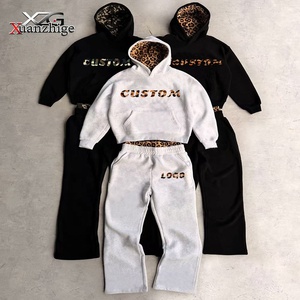
Custom Women's Leopard & Camo Lined Crop Hoodie & Wide-Leg Jogger Set
Fabric Weight: 360 GSM French Terry
MOQ: 50 Sets
Target Sector: Sakae Underground Boutiques
Directly engineered for Nagoya’s vibrant apparel sectors—from Sakae street style to high-density activewear.
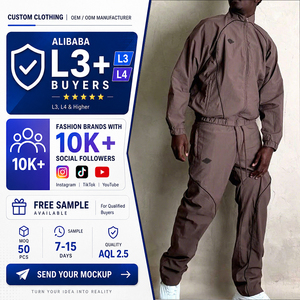
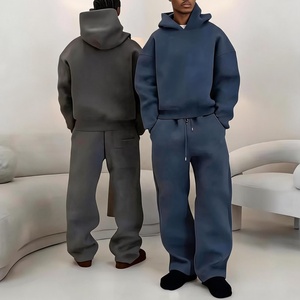
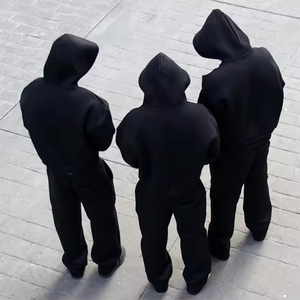
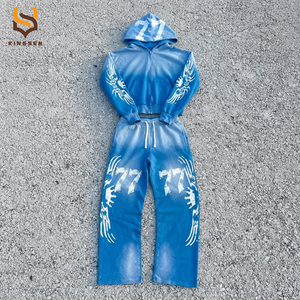
An executive guide for fashion directors, independent labels, and retail buyers navigating low-MOQ supply chains in Aichi Prefecture.
The Nagoya apparel landscape—anchored by commercial hubs like Sakae (栄) and the subculture-rich Osu (大須) shopping arcade—has undergone a structural transformation. Historical sourcing models reliant on 500-to-1,000-piece minimum order quantities (MOQs) create unsustainable inventory liability for emerging apparel labels. Contemporary Nagoya retail demands rapid product iterations, specialized fabric tactile signatures, and hyper-targeted capsule drops.
By establishing an agile cut-and-sew supply line starting from just 50 units per design, brand directors can validate localized market demand, experiment with high-GSM heavyweights or technical reflective nylon, and maintain healthy liquidity without sacrificing bespoke pattern integrity.
Japanese consumers exhibit some of the highest expectations globally regarding garment seam tolerance, color fastness, and stitch density. Off-the-shelf catalog blanks often fail to meet local expectations due to inconsistent neck-ribbing tension, uneven acid washes, or shrinkage following laundering.
Our OEM manufacturing process operates under strict alignment with JIS L (Japanese Industrial Standards for Textiles). Every garment executed for our Nagoya clients undergoes pre-shrunk fabric washing, double-needle reinforcement on stress points, and rigorous testing for color rub-fastness (JIS L 0849) to guarantee luxury-grade consumer satisfaction upon retail delivery.
How our custom cut-and-sew manufacturing capabilities map directly onto specific retail ecosystems across the Greater Nagoya Area.
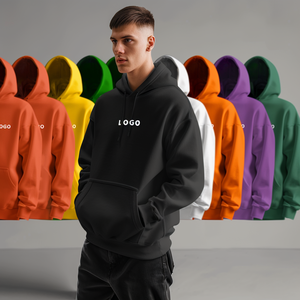
Garment Focus: Heavyweight Acid-Wash Hoodies & Cropped Zip Sweatsuits (400–460 GSM).
Boutiques surrounding Central Park and Sakae require distinct visual aesthetics. We utilize custom pigment dyeing, heavy loopback French terry, and relaxed drop-shoulder silhouettes engineered to hold structure without bagging out at the elbows.
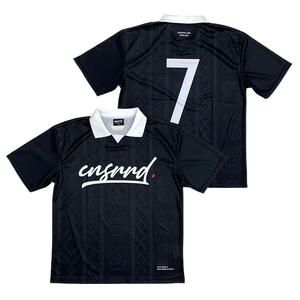
Garment Focus: Sublimated Retro Soccer Sets & Automated-Cut Vintage Jerseys.
Osu’s historical fashion district thrives on nostalgic apparel. We reproduce custom retro kit silhouettes with exact jacquard collar ribbing, breathable polyester meshes, and precise badge embroidery—offering high-margin vintage aesthetics on a reliable 50-piece reorder system.
Garment Focus: 3M Reflective Nylon Windbreakers & Tech Jogger Sets.
Designed for professionals cycling around Nagoya Station (Meieki). We incorporate 300T lightweight water-resistant ripstop nylon, 3M Scotchlite reflective trims for high visibility, and taped hydrophobic seams for tactical urban functionality.
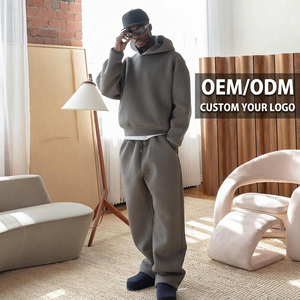
Garment Focus: Double-Knit Cotton Interlock & Custom Logo Tech Fleece Tracksuits.
Serving the lifestyle markets across Aichi and Mie prefectures. Featuring ultra-smooth handfeel, custom matte-black bonded zippers, laser-cut pocket taping, and athletic grading to match contemporary Asian body measurements.
Key technical shifts every Nagoya fashion entrepreneur and buyer must navigate in 2026 and beyond.
Standard lightweight jersey (180–220 GSM) has seen declining demand in Nagoya streetwear. Consumers favor boxy, structural silhouettes crafted from 100% combed cotton heavy fleece or dense loopback terry that maintain shape after repeated wear.
Acid wash, mineral wash, and vintage sun-faded pigment dyeing have transitioned from niche underground fashion into main retail collections. Achieving consistent wash tones across small batch runs requires temperature-controlled industrial washing facilities.
Many independent creators in Nagoya possess strong graphic design capability but lack technical garment drafting experience. Supply partners offering full tech pack construction—translating flat sketches into graded CAD sizing—are gaining significant market share.
Combining centralized, Western-standard account control with our owned overseas manufacturing facility.
Unlike trading agents who mark up prices and lose control of factory scheduling, we operate our own specialized apparel factory overseas managed by native English and Japanese-speaking merchandisers. This guarantees true wholesale pricing at 50-piece MOQs while maintaining strict contract law accountability.
Every batch destined for Nagoya undergoes a 4-tier audit: (1) Raw fabric shading & flaw inspection, (2) In-line seam integrity checks, (3) End-of-line measurement against approved size tech packs, and (4) Final pre-pack inspection before door-to-door dispatch.
Don't have a formal tech pack? Share a reference garment, sketch, or mood board. Our digital 3D pattern development team builds precise spec sheets, bill-of-materials (BOM), and graded size charts—reducing sampling iterations by up to 50%.
Digital 3D trial and commercial objective review to prepare design files for real-world cutting.
Custom grading across sizes (S through 2XL) tailored to Japanese market fit profiles.
Knit-to-order fabrics, custom Pantone yarn dyeing, and eco-certified organic cotton sourcing.
Physical pre-production prototype delivered for fit testing and detail refinement prior to bulk manufacturing.
Precision cut-and-sew execution on our dedicated production line overseen by senior technicians.
4-stage audit, individual polybagging, custom woven labeling, and express shipment direct to Aichi.
Clear, direct technical answers regarding logistics, custom clearance, lead times, and order specifications.
We manage complete export documentation. For air cargo (destined for Chubu Centrair International Airport - NGO) or sea freight (arriving at Port of Nagoya), we provide full commercial invoices, packing lists, and origin certificates needed for smooth Japanese customs clearance and tariff classification.
Our baseline cut-and-sew MOQ is 50 pieces per design using our extensive library of pre-milled heavyweight fabrics. If your project requires custom Pantone dyeing, mill minimums typically start around 100–150 pieces per colorway. We present all fabric routes transparently prior to sampling.
Yes. If you do not have a digital CAD tech pack, you can courier a physical sample garment to our office. Our pattern makers will deconstruct its measurements, fit, and seam construction to build a master digital tech pack for your brand.
Fully customized woven main labels, satin size tags, swing tags, and Japanese regulatory care labels (showing fiber content percentages and wash care symbols conforming to JIS L 0001) are manufactured in-house and attached during final assembly.
Pattern creation and physical sampling generally require 2 to 3 weeks. Upon sample approval, bulk cut-and-sew manufacturing takes approximately 4 to 5 weeks, with air freight adding an additional 5–7 days directly to your Nagoya warehouse.
Every single garment is cut and sewn from scratch to order. We do not sell cheap stock blanks. You retain 100% control over fabric composition, custom pattern measurements, ribbing weight, hardware zippers, and print placements.
Consult directly with our apparel merchandising team. Get instant feedback on tech specs, fabric selections, low-MOQ pricing, and delivery timelines for your brand.