Designed to meet international compliance standards, our primary streetwear production runs leverage precision pattern cutting, custom yarn spinning, and multi-stage garment testing for high-turnover retail environments in Johannesburg, Cape Town, and Durban.
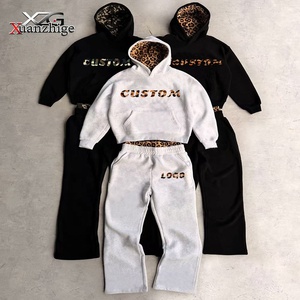

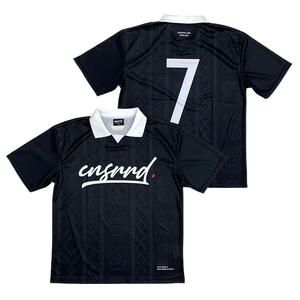

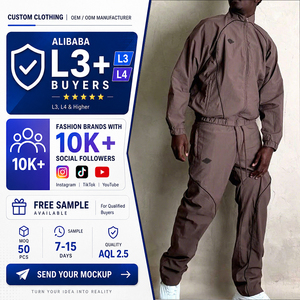


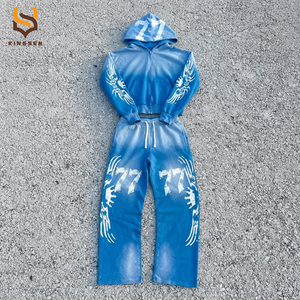
Navigating global textile manufacturing from South Africa requires balancing three critical variables: low initial capital investment, strict garment quality control, and frictionless customs clearing under SARS (South African Revenue Service) guidelines. Emerging fashion labels in Braamfontein or the Victoria & Alfred Waterfront often face high minimum order quantities (MOQs) from domestic cut-and-sew units or inconsistent quality from unverified overseas brokers.
As an established international manufacturer—headquartered with direct administrative oversight from London (Hawthorn International Ltd) alongside owned overseas production facilities—we deliver a streamlined supply chain model tailored specifically for South African enterprise clients and independent streetwear creators alike.
Unlike trading agents or broker networks, our infrastructure combines UK-standard contract reliability and native English merchandising with owned offshore factory operations. This hybrid framework ensures:
From digital 3D pre-production visualization to custom-knitted heavy GSM fabrics, our production line is calibrated for structural durability and modern streetwear silhouettes.
Every batch undergoes incoming fabric shade/GSM verification, inline seam integrity checks, pre-assembly dimensional checks against graded spec sheets, and final 100% pre-pack auditing.
Minimize sample revision cycles with digital 3D rendering. We model tension maps, drape physics, and pattern grading digitally before cutting physical meters of custom cotton fleece.
Custom reactive dyeing to exact Pantone TCX references. Comprehensive wash capabilities including vintage acid wash, stone wash, pigment dipping, and silicone softening treatments.
Streetwear in Southern Africa has evolved beyond basic casualwear into a culturally rich movement driven by music, youth culture, and high-density urban fashion centers. Successful brand positioning in South Africa demands precise material selection tailored to distinct micro-climates and regional wear requirements.
| Region / Urban Hub | Dominant Market Trend | Recommended Fabric & Technical Spec | Key Performance Requirements |
|---|---|---|---|
| Gauteng (Johannesburg / Pretoria) | High-End Luxury Streetwear & Executive Athleisure | 400-500 GSM Heavyweight French Terry / 100% Combed Cotton Fleece | Thermal retention during dry winter nights, structured boxy drape, anti-pilling surface. |
| Western Cape (Cape Town) | Coastal Windbreakers, Active Lifestyle & Outdoor Utility | 3M Reflective Taslan Nylon, 240 GSM Technical Mesh, DWR Coating | Windproofing, water resistance, quick-dry properties, lightweight UV protection. |
| KwaZulu-Natal (Durban) | Sub-Tropical Heritage Streetwear & Retro Sportswear | 220-260 GSM Premium Single Jersey, 60/40 Cotton-Poly Blends | Breathability, moisture-wicking capabilities, high colorfastness under direct sunlight. |
| National Retail Networks | Capsule Drops & Festival Merchandising | 300 GSM Brushed Fleece Tracksuits, Acid Wash Finished Sets | Repeat wash durability, reinforced double-needle stitching, custom branded trims. |
Providing genuine information gain for sourcing directors: Understanding thread counts, knitting specifications, and wash chemistries is fundamental to manufacturing garments that withstand long-distance shipping and intensive consumer use.
For premium streetwear, fabric weight determines silhouette integrity. Standard retail blanks often use 240 GSM semi-combed yarns, leading to sagging collars and loss of shape after three washes. Our production lines specialize in 32s/2 and 20s/1 long-staple combed cotton knitted at higher density matrices.
When producing oversized hoodies for the South African winter, we recommend 420 GSM to 500 GSM French Terry with a 100% cotton face yarn. This specific 3-end fleece structure prevents internal poly-fluff shedding while maintaining an ultra-smooth surface for high-density screen printing or Direct-to-Garment (DTG) applications.
A complete custom garment requires bespoke secondary components. Our cut-and-sew operations integrate custom-branded accessories natively into assembly:
Exporting apparel into South Africa requires careful adherence to national customs policies managed by SARS and ITAC (International Trade Administration Commission of South Africa). Ensuring smooth clearance through OR Tambo International Airport (Air Freight) or Durban Port (Ocean Freight) is built into our commercial account management process.
We provide fully line-itemized commercial invoices with precise Harmonized System (HS) codes (e.g., Chapter 61 for knitted garments, Chapter 62 for woven jackets), ensuring correct tariff calculation and avoiding SARS border holds.
Choose between Express Air Courier (DHL/FedEx, 4-7 business days for time-sensitive capsule drops) or Sea Freight (LCL/FCL into Durban/Cape Town, 22-30 days for bulk cost optimization).
To protect South African buyers against ZAR/USD fluctuations, quotes are locked in upon milestone approval, allowing brands to budget exact landed costs per unit prior to bulk cutting.
Key information regarding minimums, production timelines, and custom technical garment development.
Connect with our technical merchandising team today to discuss your tech pack requirements, fabric sourcing options, and get an institutional quotation for your next drop.
Get a Quote